VIEW MORE CAPTURES AND SESSION DETAILS ON MY TELESCOPIUS PROFILE
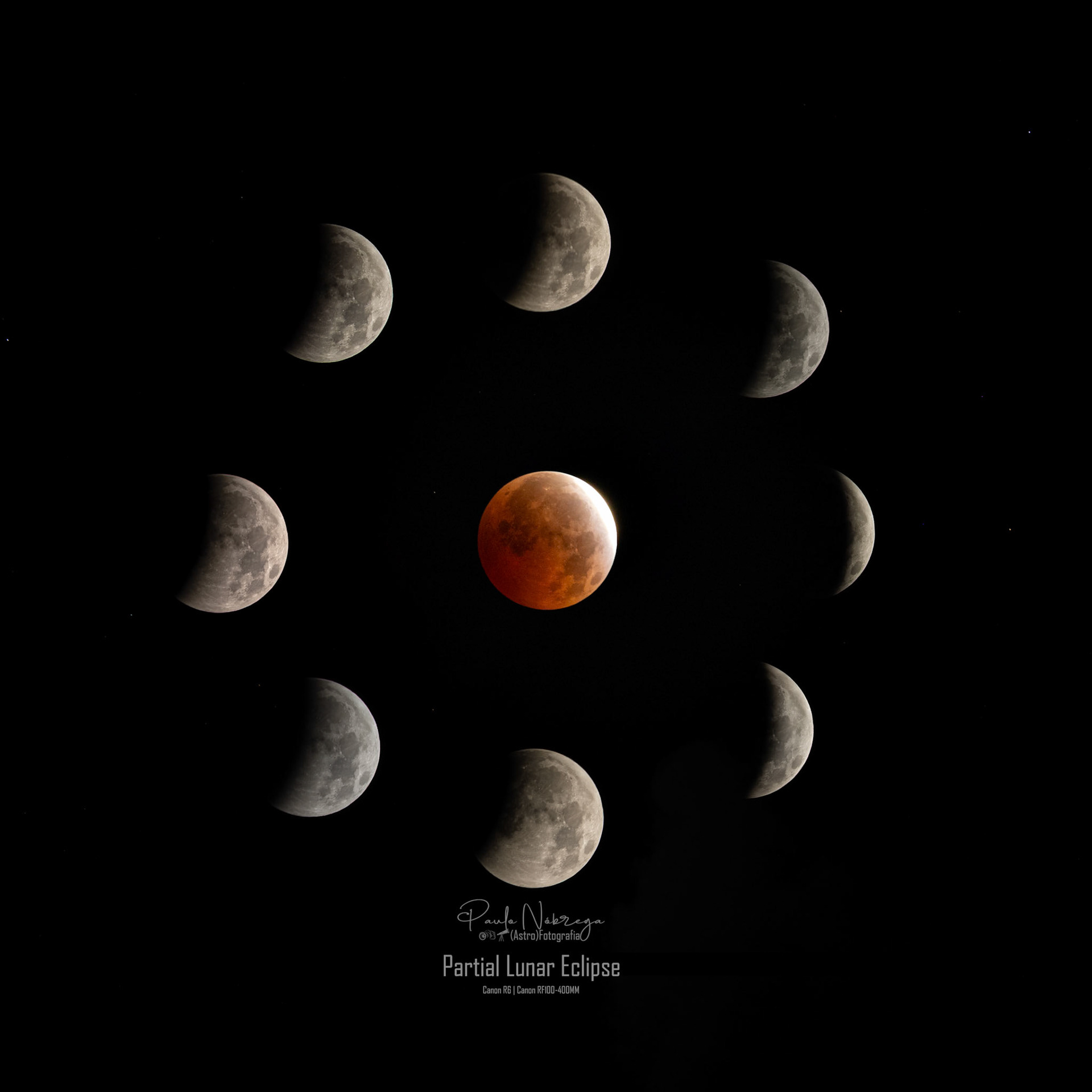
A circular composite capturing the progression of the Partial Lunar Eclipse. The sequence follows the Moon entering Earth's shadow, culminating in the deep reddish tones of the umbra at the center, caused by Rayleigh scattering through Earth's atmosphere.
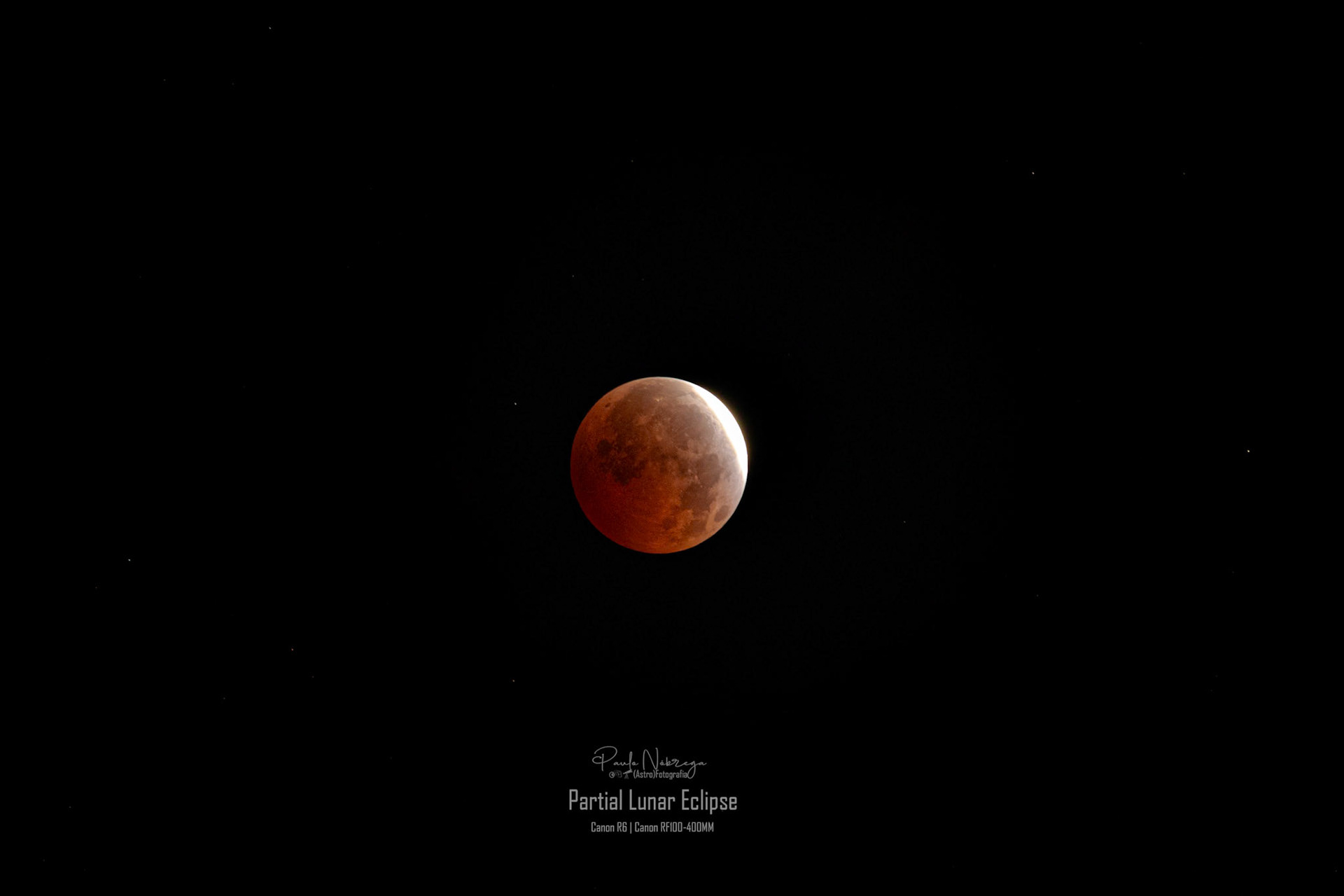
Peak of the Partial Lunar Eclipse. The lunar surface is bathed in Earth's shadow (umbra), revealing the characteristic coppery red hue caused by all of Earth's sunrises and sunsets refracting through our atmosphere.
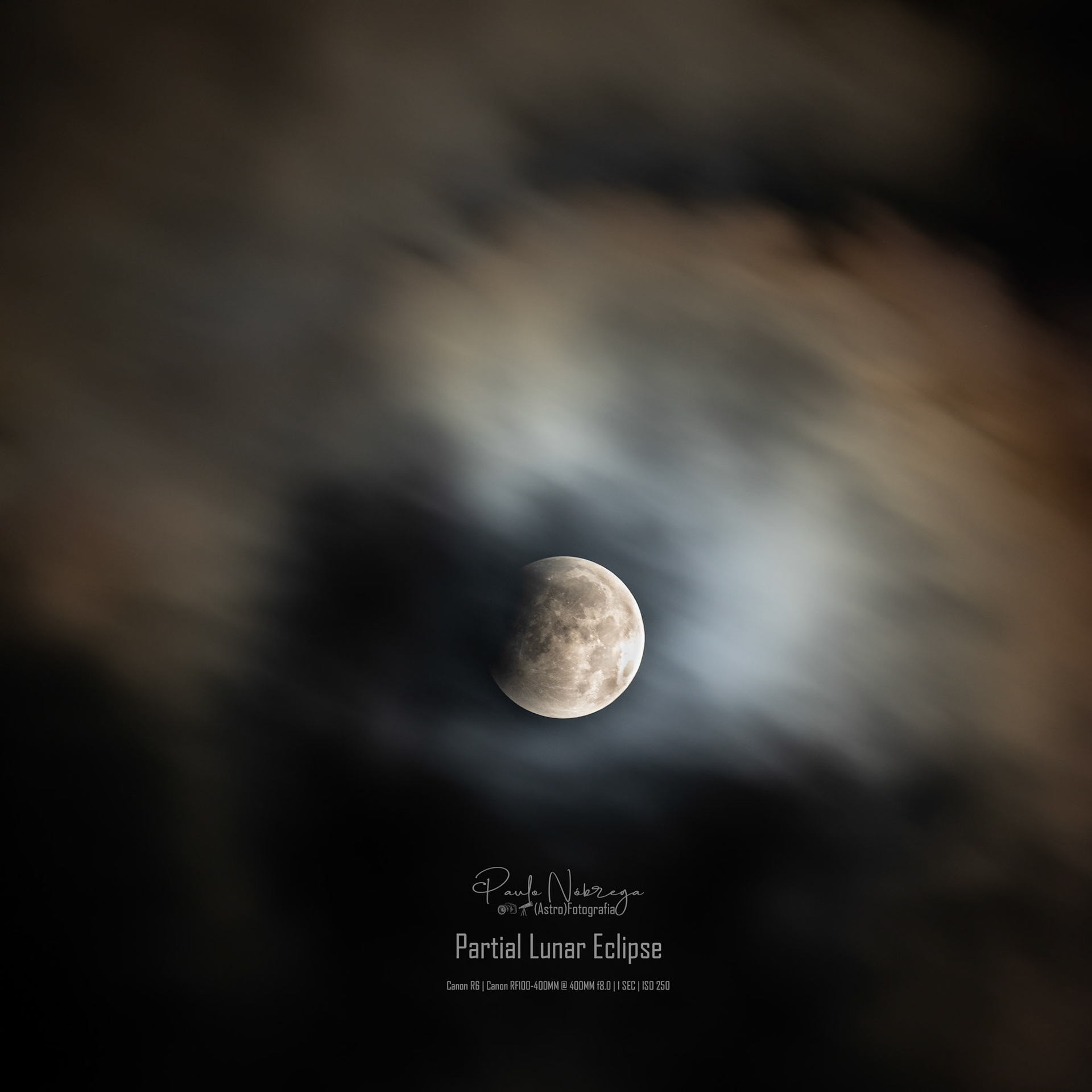
Atmospheric transit. A single exposure of the Partial Lunar Eclipse captured through passing clouds, balancing the bright sunlit maria with the soft glow diffused across the night sky.
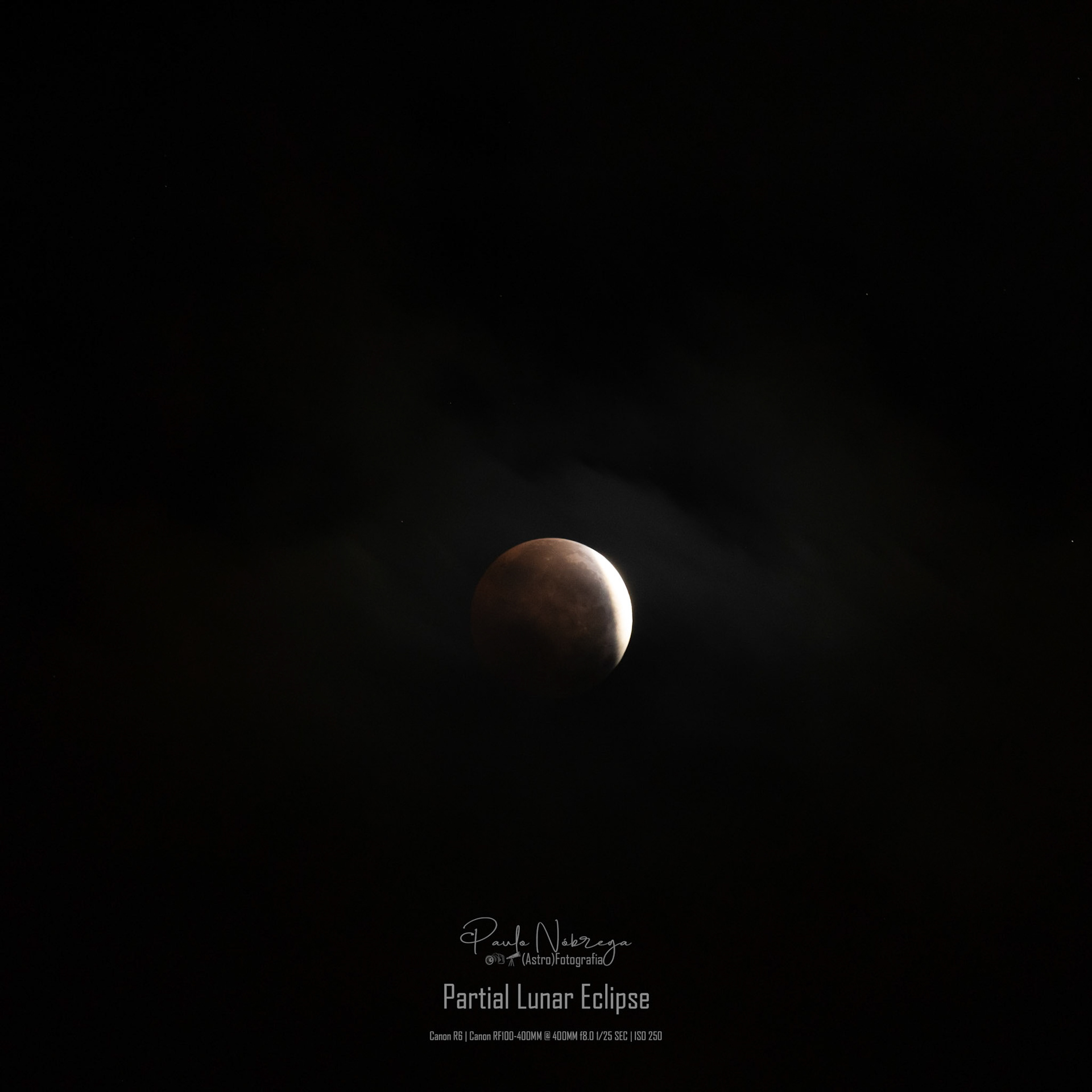
A sliver of sunlight during the Partial Lunar Eclipse. Captured against deep space with subtle wisps of passing clouds, revealing both the intense illuminated crescent and the soft gradient of Earth's shadow across the lunar terrain.

The Veil Nebula (Cygnus Loop) — Located approximately 2,400 light-years away in the constellation Cygnus, this expansive supernova remnant originated from the violent death of a massive star around 10,000 to 20,000 years ago. This wide mosaic reveals the intricate, filamentary shockwaves where expanding gas collides with interstellar material, glowing brightly in ionized hydrogen and oxygen across tens of light-years of space.
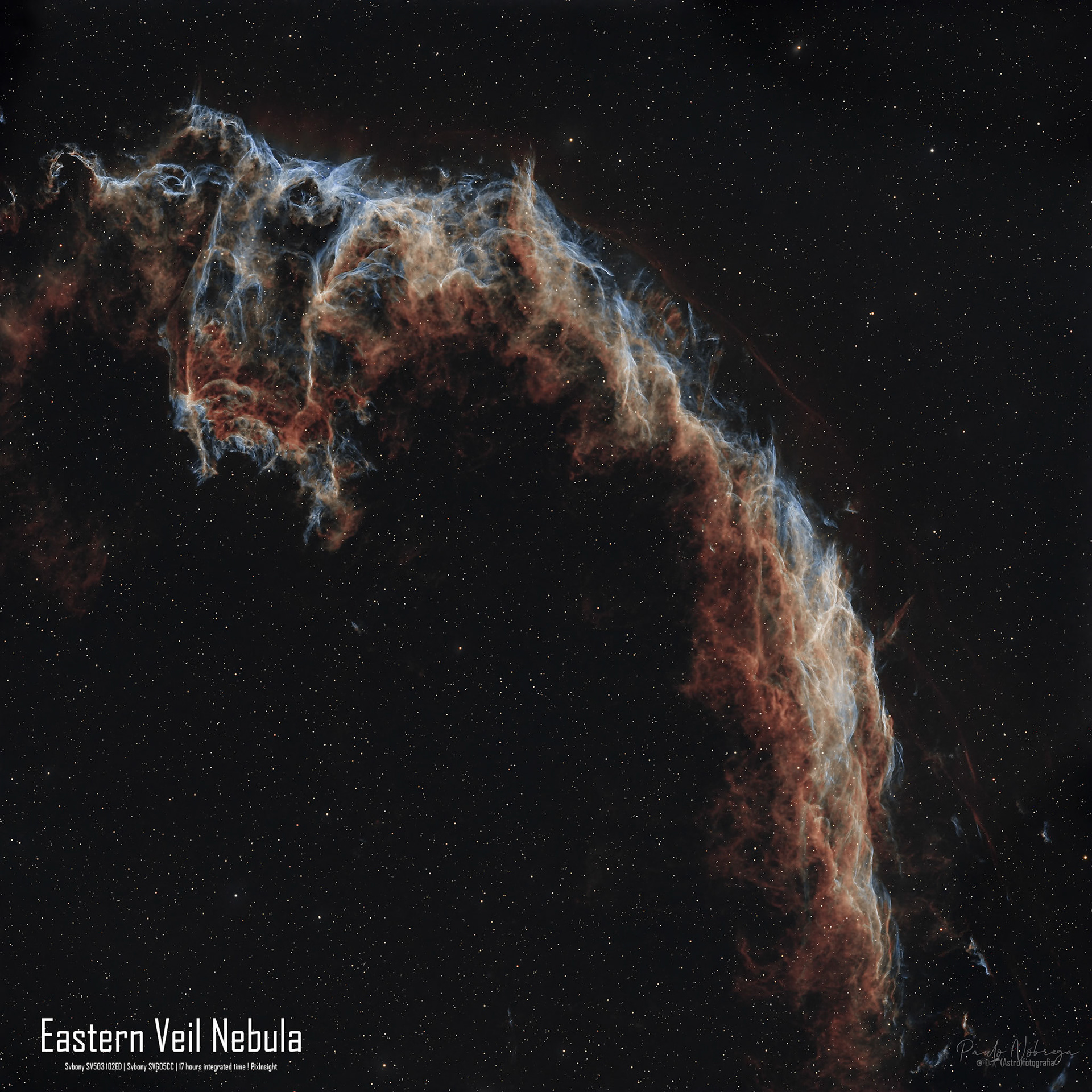
Eastern Veil Nebula (NGC 6992) — Supernova Remnant in CygnusLocated roughly 2,400 light-years away in the constellation Cygnus, NGC 6992 forms the eastern edge of the famous Cygnus Loop. This detailed deep-sky astrophotography capture reveals delicate filamentary structures created by supersonic shockwaves compressing interstellar gas, glowing prominently in ionized hydrogen-alpha and doubly ionized oxygen (OIII).
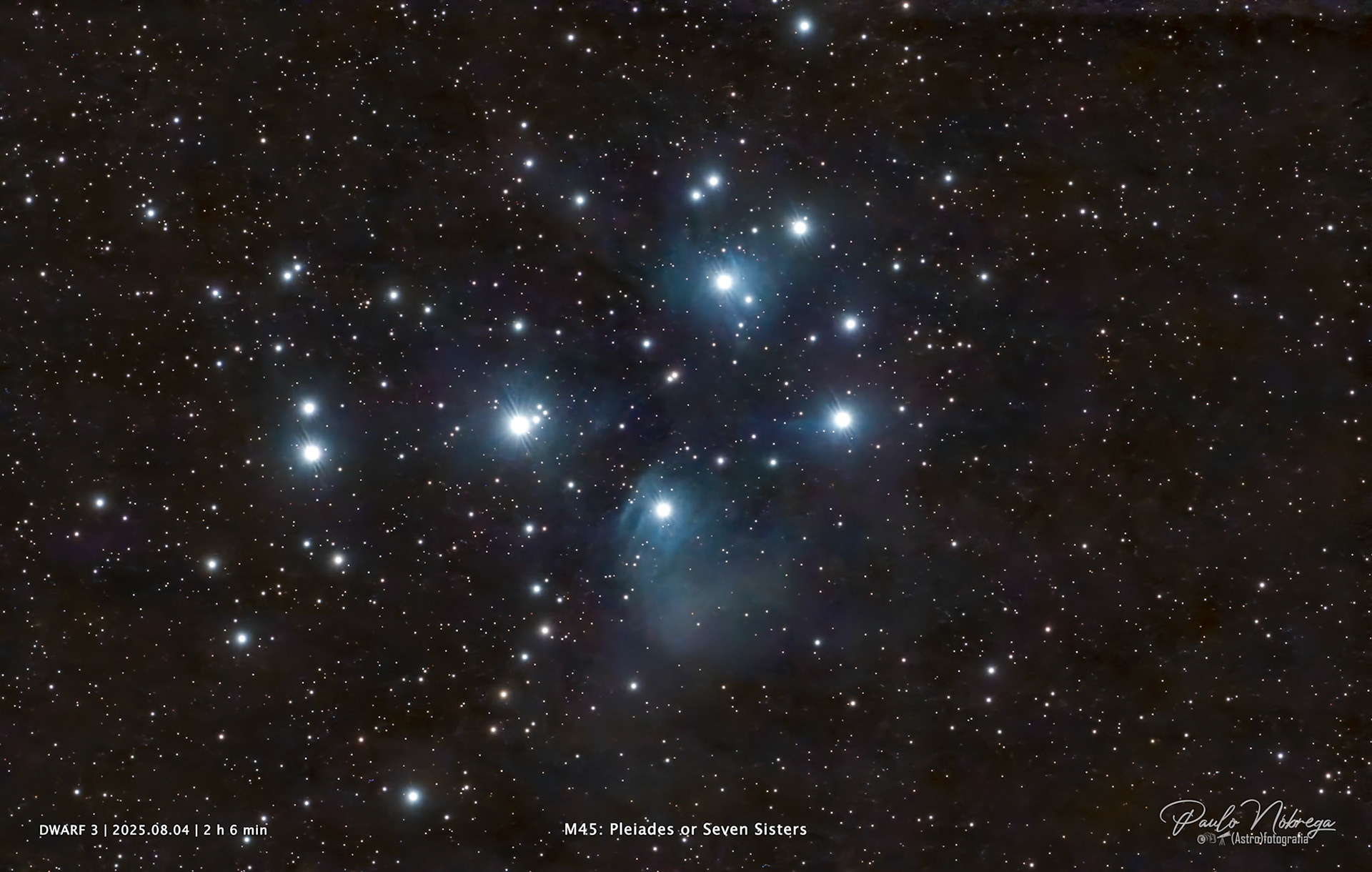
The Pleiades (Messier 45) — Open Star Cluster & Reflection NebulaLocated approximately 444 light-years away in the constellation Taurus, the Pleiades (also known as the Seven Sisters) is an open star cluster dominated by hot, luminous blue stars. This deep-sky astrophotography image highlights the faint interstellar dust clouds passing through the cluster, illuminated as a striking blue reflection nebula by the intense light of its youngest stars.

Andromeda Galaxy (Messier 31 / NGC 224) — Spiral Galaxy in Deep SkyLocated roughly 2.5 million light-years away in the constellation Andromeda, M31 is the closest major spiral galaxy to our own Milky Way and the most distant object visible to the naked eye. This deep-sky astrophotography capture reveals the galaxy's bright galactic core, dark interstellar dust lanes winding through its spiral arms, and its prominent satellite dwarf galaxies, Messier 32 and Messier 110.
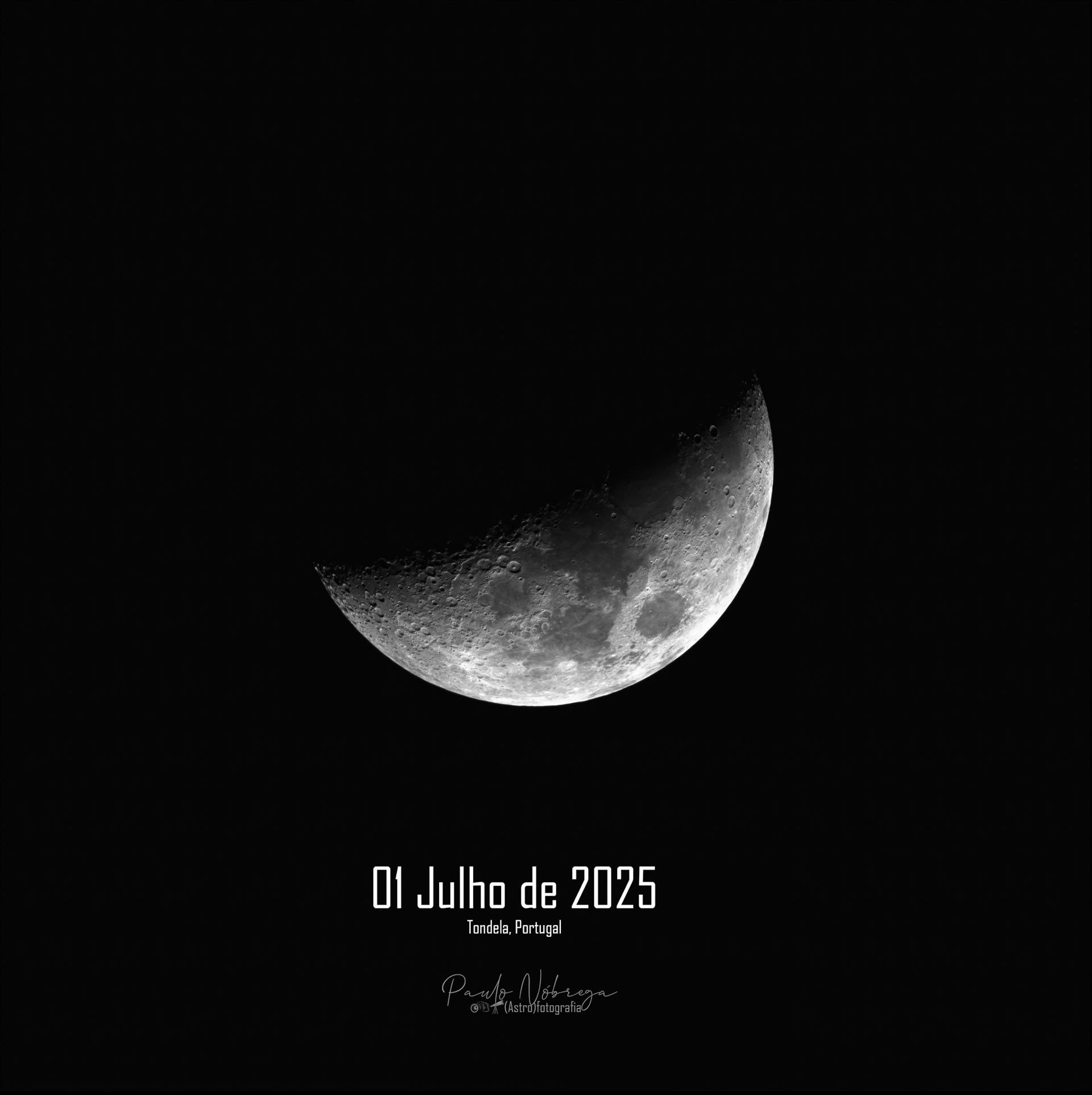
Waxing Crescent Moon — High-Resolution Lunar AstrophotographyHigh-contrast lunar capture highlighting the Moon in its waxing crescent phase, roughly 384,400 km from Earth. The low angle of sunlight along the lunar terminator casts long, dramatic shadows that accentuate rugged impact craters, mountain ridges, and volcanic basalt plains across the Moon's surface.
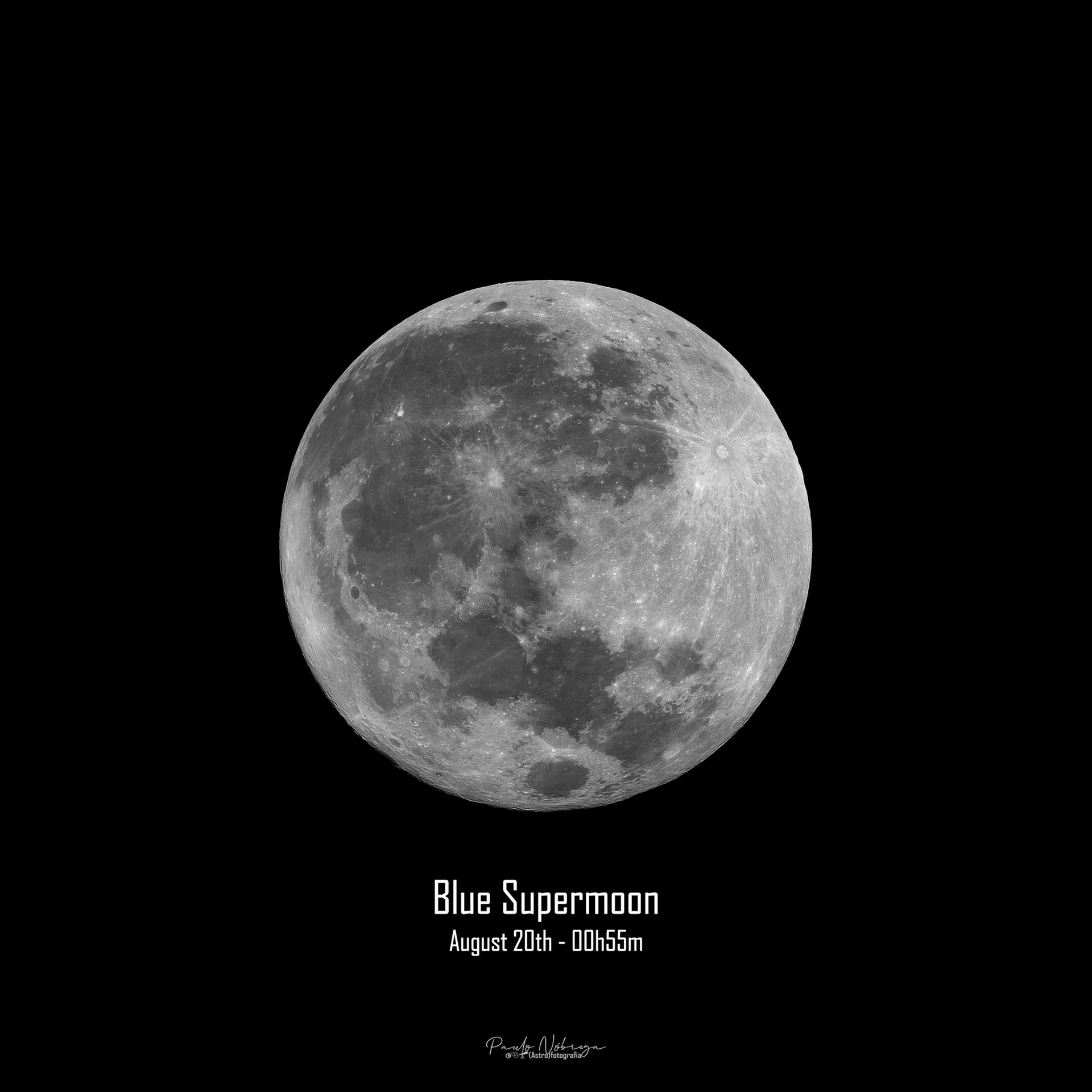
Full Blue Supermoon — Perigee-Syzygy Lunar AstrophotographyHigh-resolution view of the Full Blue Supermoon, captured while the Moon was near its perigee (closest orbital approach to Earth at ~357,000 km). This alignment makes the lunar disk appear up to 14% larger and 30% brighter than at apogee, emphasizing the rich geological textures of lunar maria, rayed impact craters like Tycho and Copernicus, and high-contrast surface albedo features.
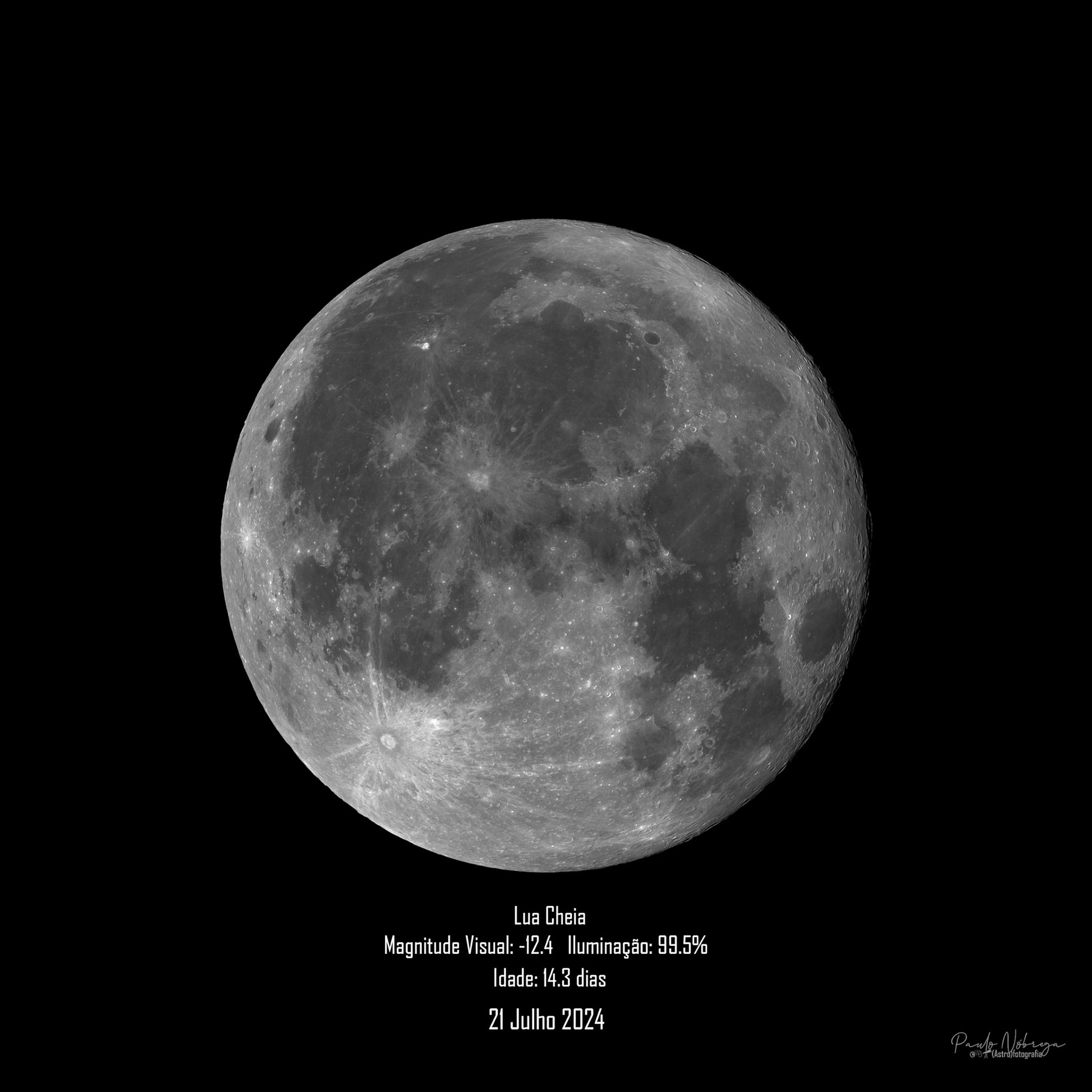
Full Moon (Buck Moon) — High-Resolution Lunar AstrophotographyHigh-contrast mosaic of the Full Moon, captured at roughly 384,400 km from Earth. The direct overhead solar illumination reveals prominent ray systems emanating from Tycho and Copernicus craters, contrasted against the dark volcanic basalt plains of the lunar maria.
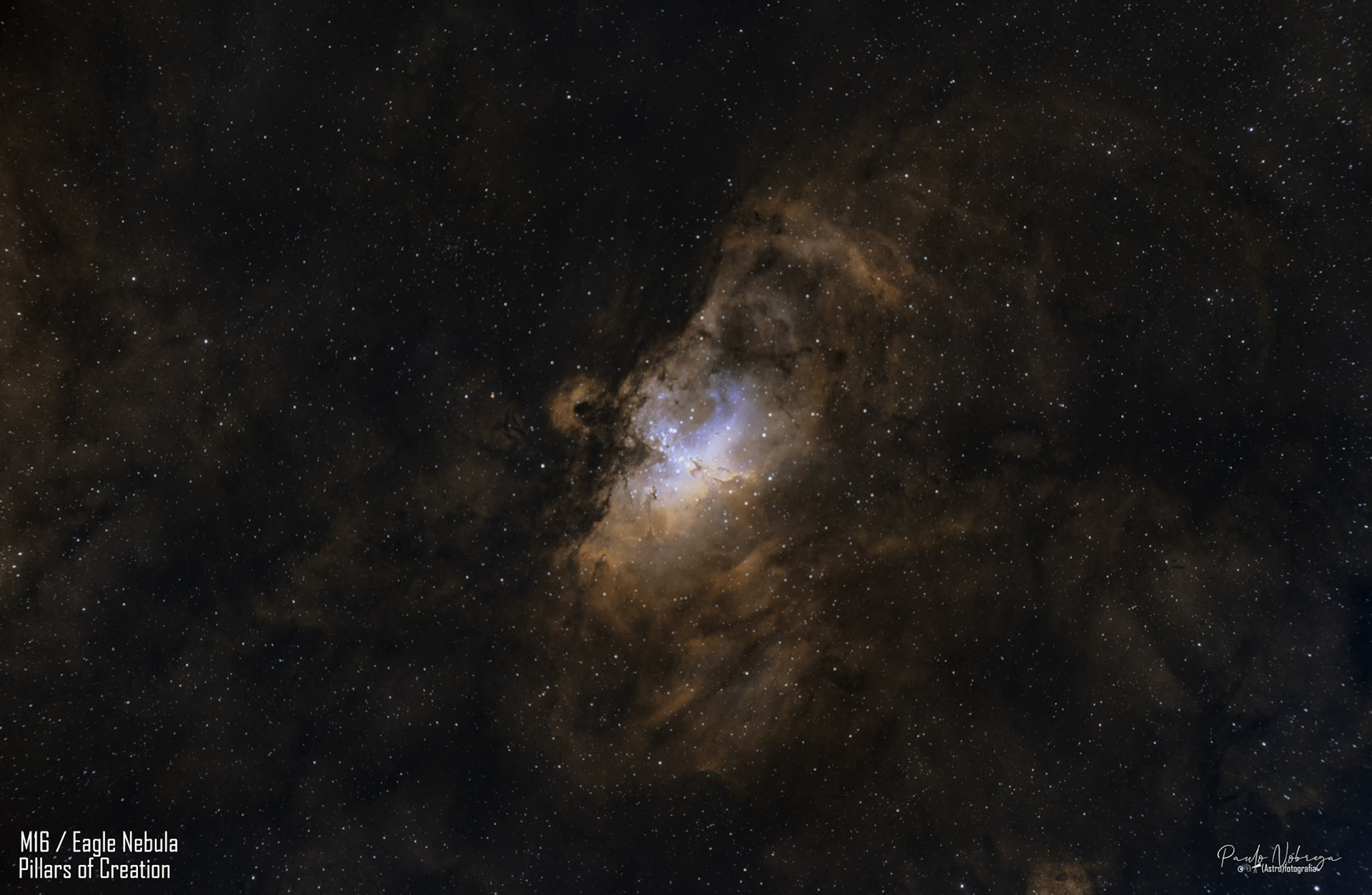
Eagle Nebula & Pillars of Creation (Messier 16 / NGC 6611)Located roughly 7,000 light-years away in the Serpens constellation, the Eagle Nebula is an active star-forming region. This deep-sky astrophotography capture reveals the iconic "Pillars of Creation" — towering columns of dense interstellar gas and cosmic dust sculpted by ultraviolet radiation from young, massive stars.
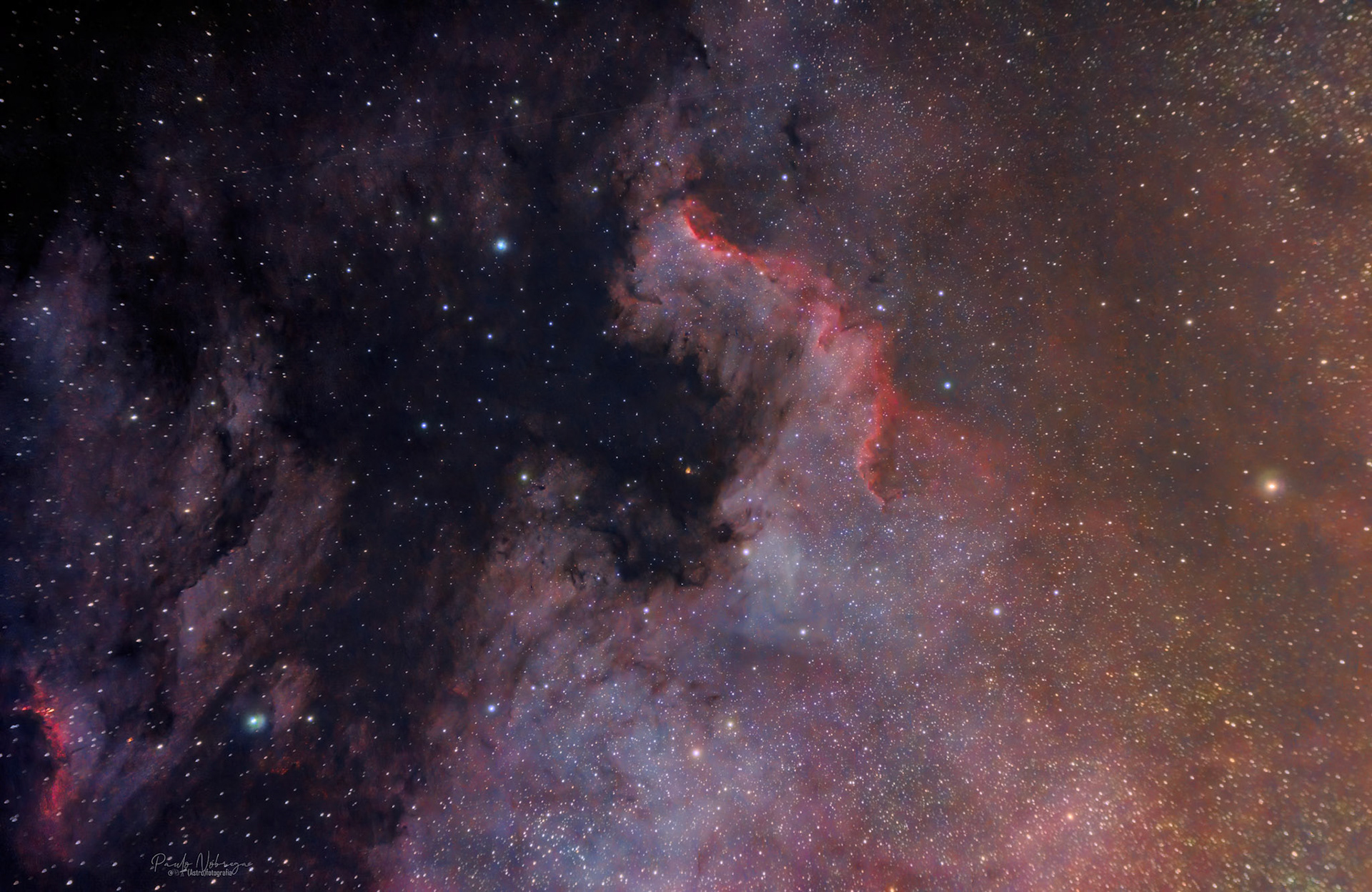
North America Nebula (NGC 7000) & Cygnus Molecular CloudLocated approximately 2,590 light-years away in the constellation Cygnus, this vast emission nebula glows brightly with ionized hydrogen (H-alpha). The prominent dark region, known as the Cygnus Wall, represents an active interstellar ridge of high-density gas and dust undergoing gravitational collapse to form new stars.
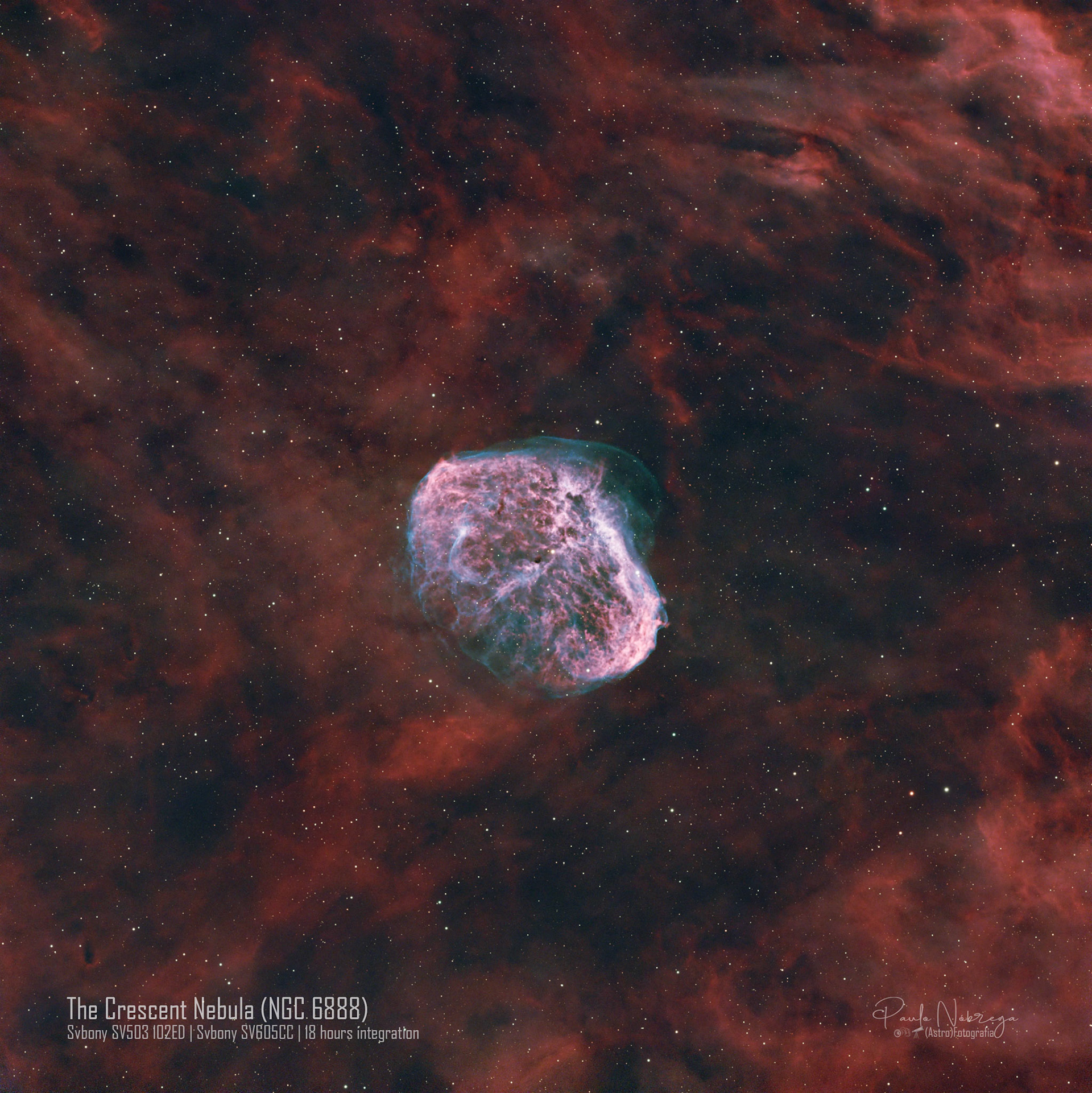
Crescent Nebula (NGC 6888 / Sharpless 105) — Emission Nebula in CygnusLocated roughly 5,000 light-years away in the constellation Cygnus, the Crescent Nebula is a cosmic bubble blown by powerful stellar winds from the central Wolf-Rayet star (WR 136). This deep-sky astrophotography capture reveals the delicate, brain-like shell formed as fast winds collide with slower gas ejected earlier in the star's life, glowing brightly in ionized hydrogen (H-alpha) and enveloped in a faint outer envelope of doubly ionized oxygen (OIII).
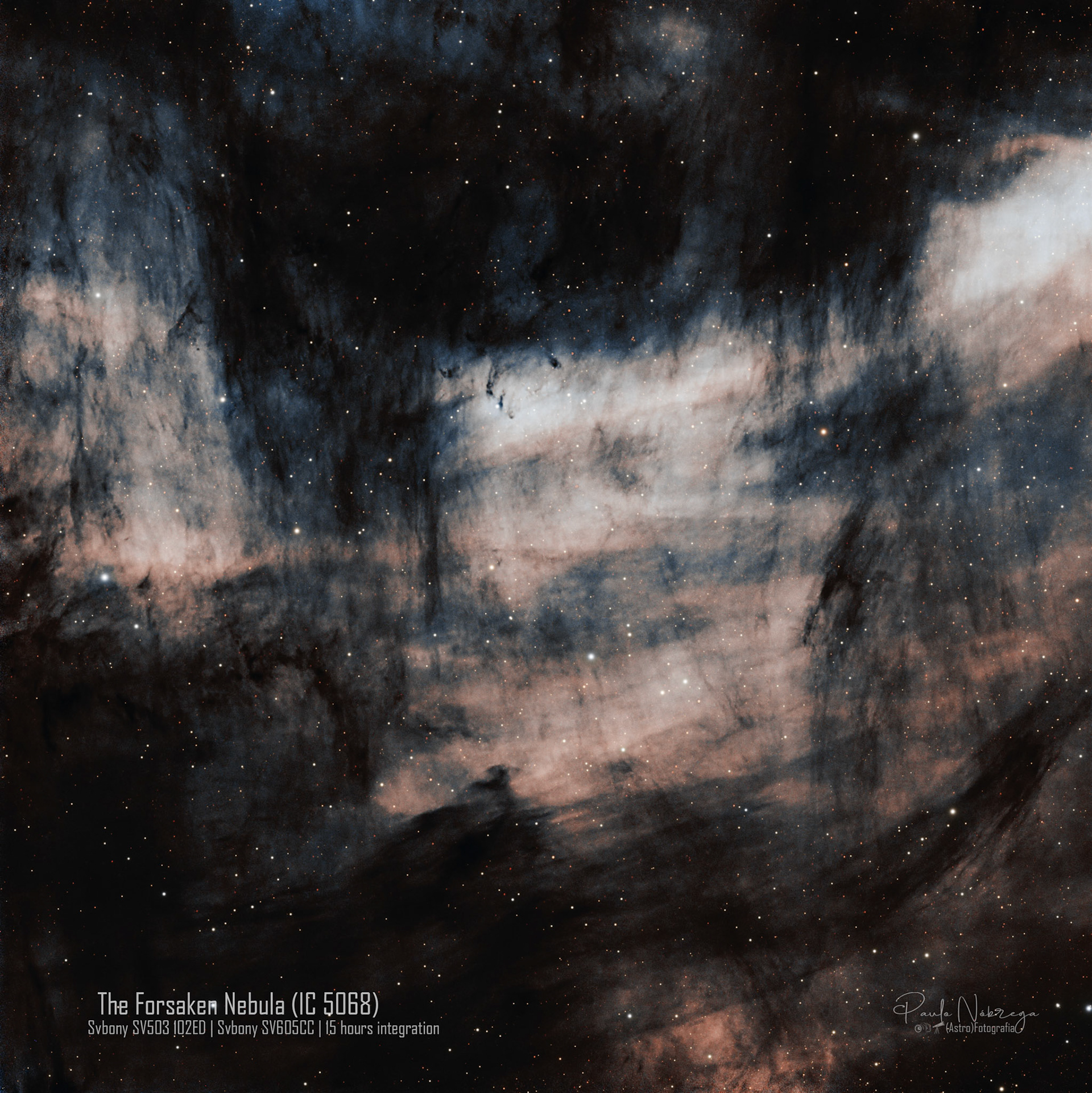
The Forsaken Nebula (IC 5068) — Emission Nebula & Molecular CloudLocated approximately 2,000 light-years away in the constellation Cygnus, IC 5068 is an emission nebula closely tied to the vast North America and Pelican star-forming complex. This deep-sky astrophotography capture reveals luminous hydrogen and oxygen gases intertwined with dense, opaque lanes of interstellar dust that silhouette and sculpt the cosmic landscape.
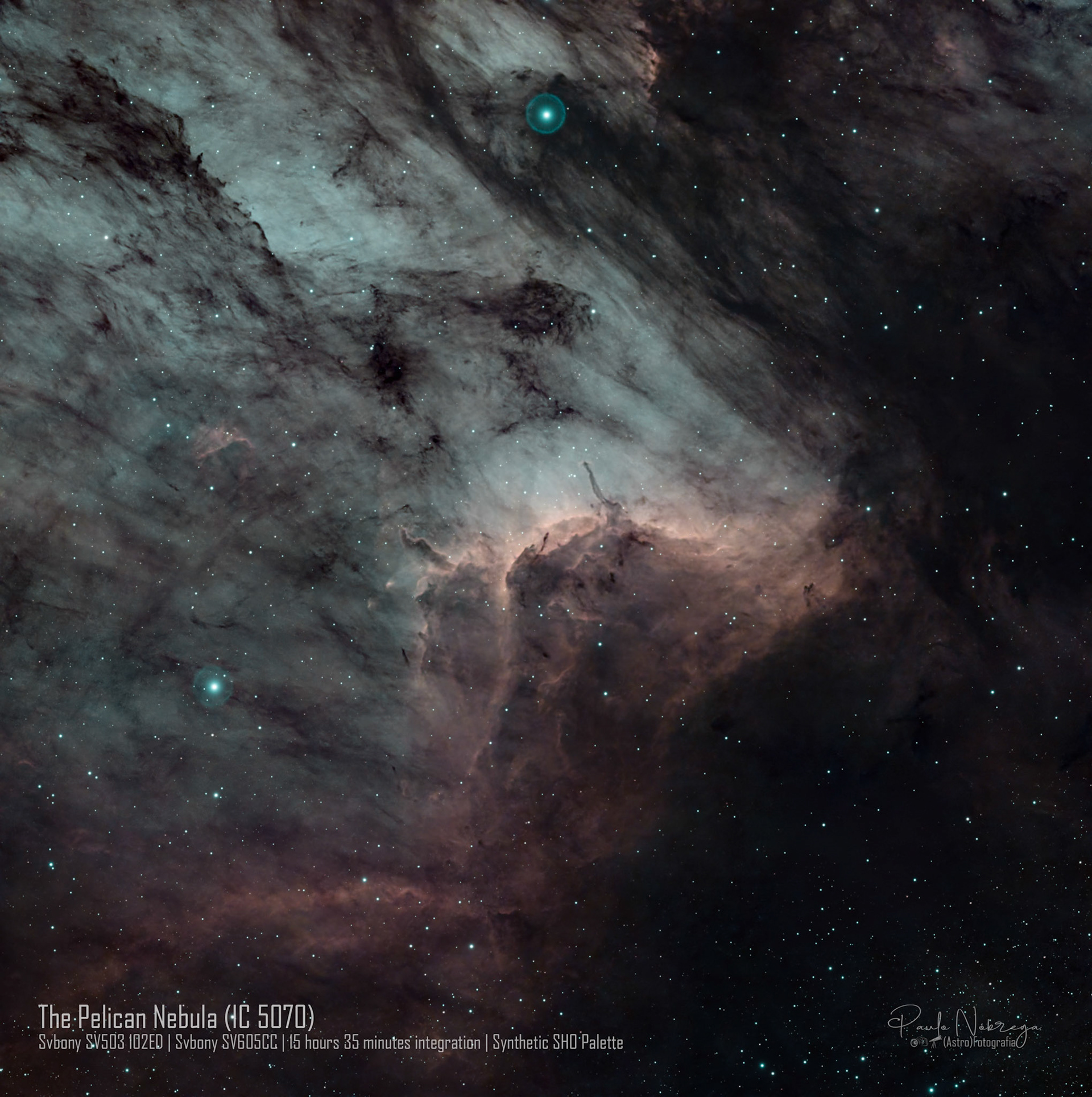
The Pelican Nebula (IC 5070) — Synthetic SHO: Emission Nebula & Stellar NurseryLocated roughly 2,000 light-years away in the constellation Cygnus, the Pelican Nebula is an active star-forming region associated with the North America Nebula. Processed here in narrowband, this deep-sky capture highlights the dynamic ionization front where energetic radiation from young stars sculpts towering ridges of cold gas and dark interstellar dust.
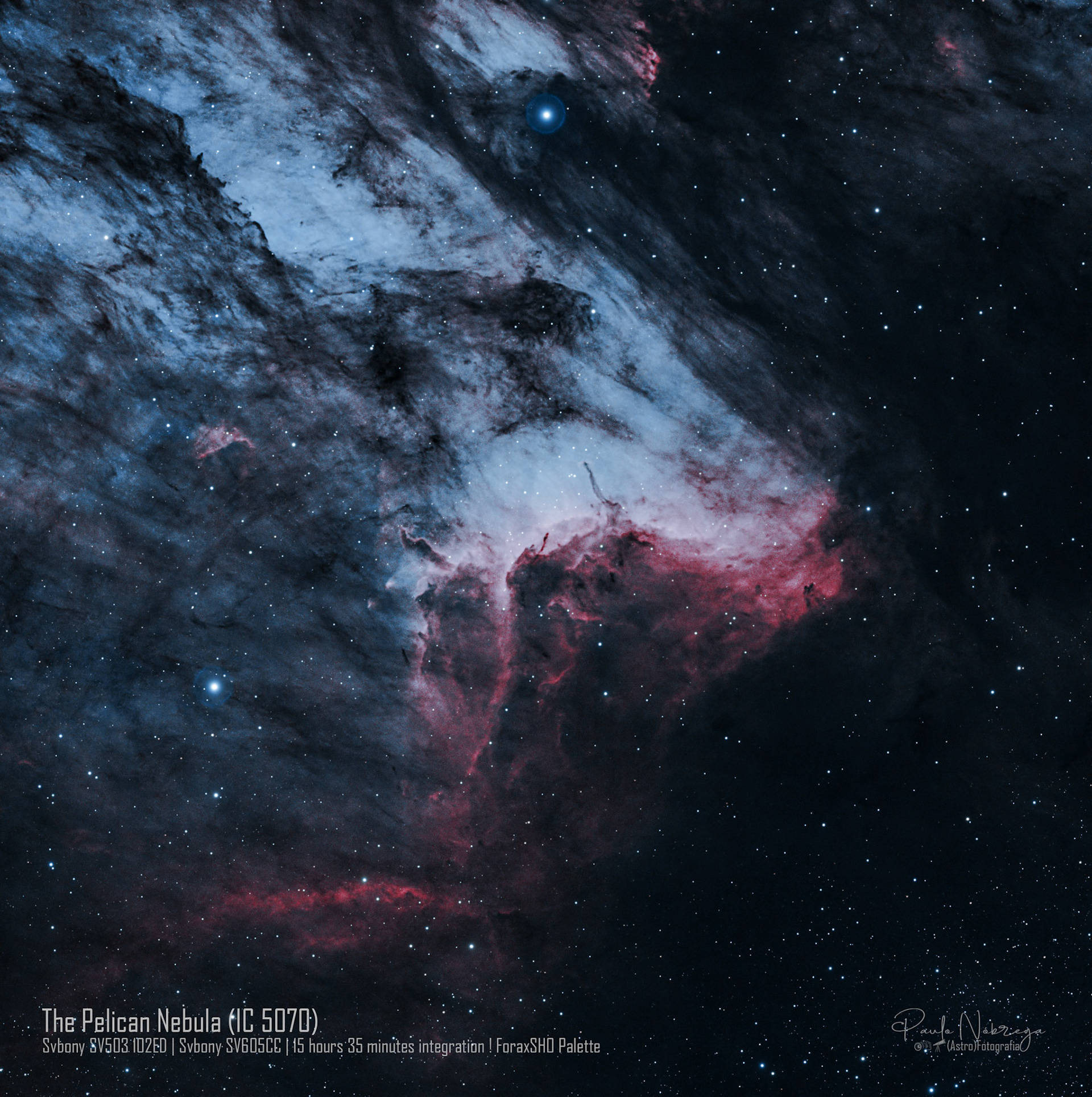
The Pelican Nebula (IC 5070) — ForaxSHO: Emission Nebula & Stellar NurseryLocated roughly 2,000 light-years away in the constellation Cygnus, the Pelican Nebula is an active star-forming region associated with the North America Nebula. Processed here in narrowband, this deep-sky capture highlights the dynamic ionization front where energetic radiation from young stars sculpts towering ridges of cold gas and dark interstellar dust.
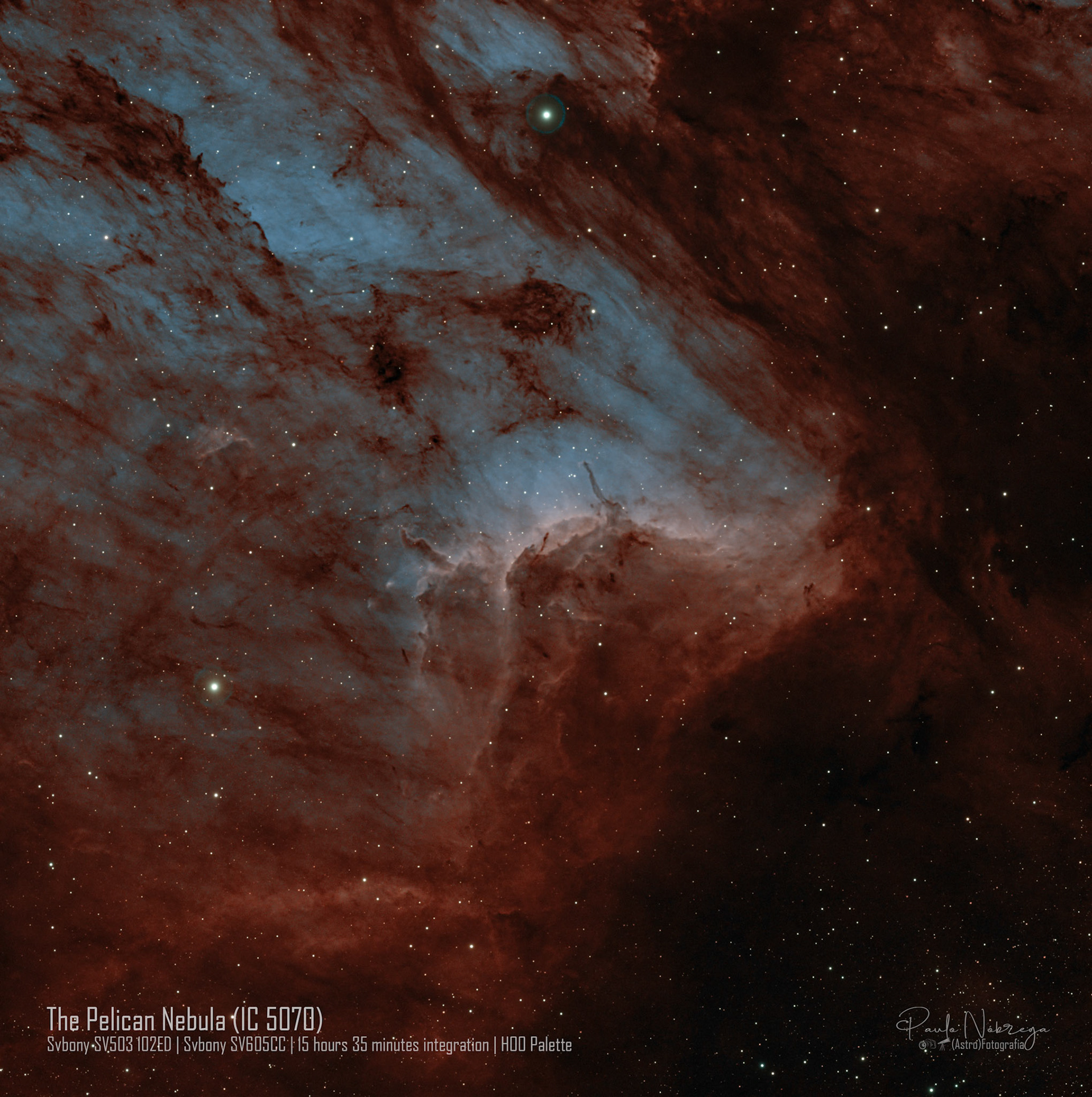
The Pelican Nebula (IC 5070) — HOO: Emission Nebula & Stellar NurseryLocated roughly 2,000 light-years away in the constellation Cygnus, the Pelican Nebula is an active star-forming region associated with the North America Nebula. Processed here in narrowband, this deep-sky capture highlights the dynamic ionization front where energetic radiation from young stars sculpts towering ridges of cold gas and dark interstellar dust.
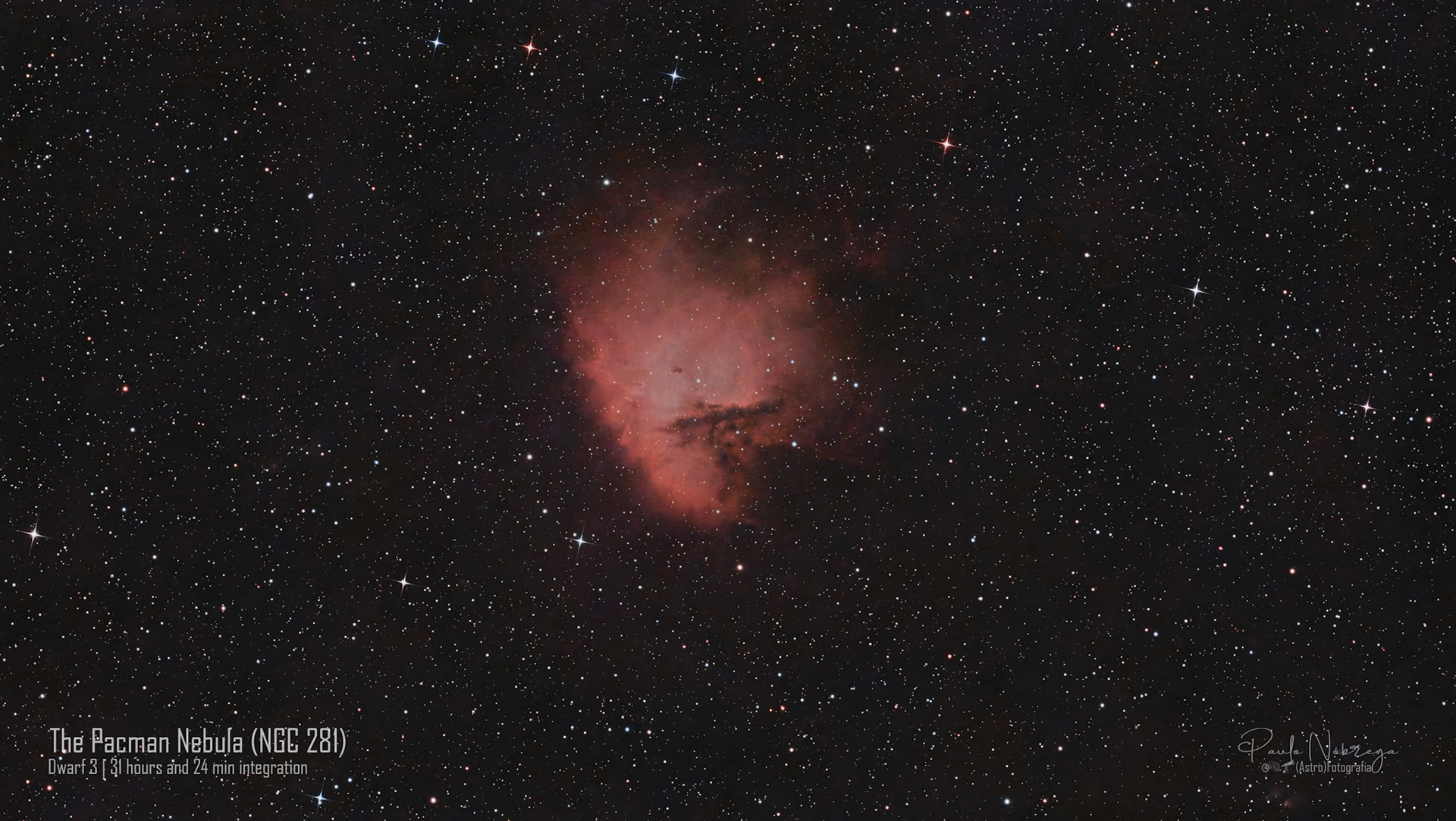
The Pacman Nebula (NGC 281 / IC 11) — H II Region in CassiopeiaSituated approximately 9,500 light-years away in the constellation Cassiopeia, NGC 281 earned its popular nickname due to its resemblance to the classic arcade character Pac-Man. This wide-field deep-sky capture highlights the vibrant ionized emission gas punctuated by dense lanes of obscuring cosmic dust and prominent Bok globules—compact, cold clouds of interstellar gas where new stellar systems are currently collapsing and taking shape.