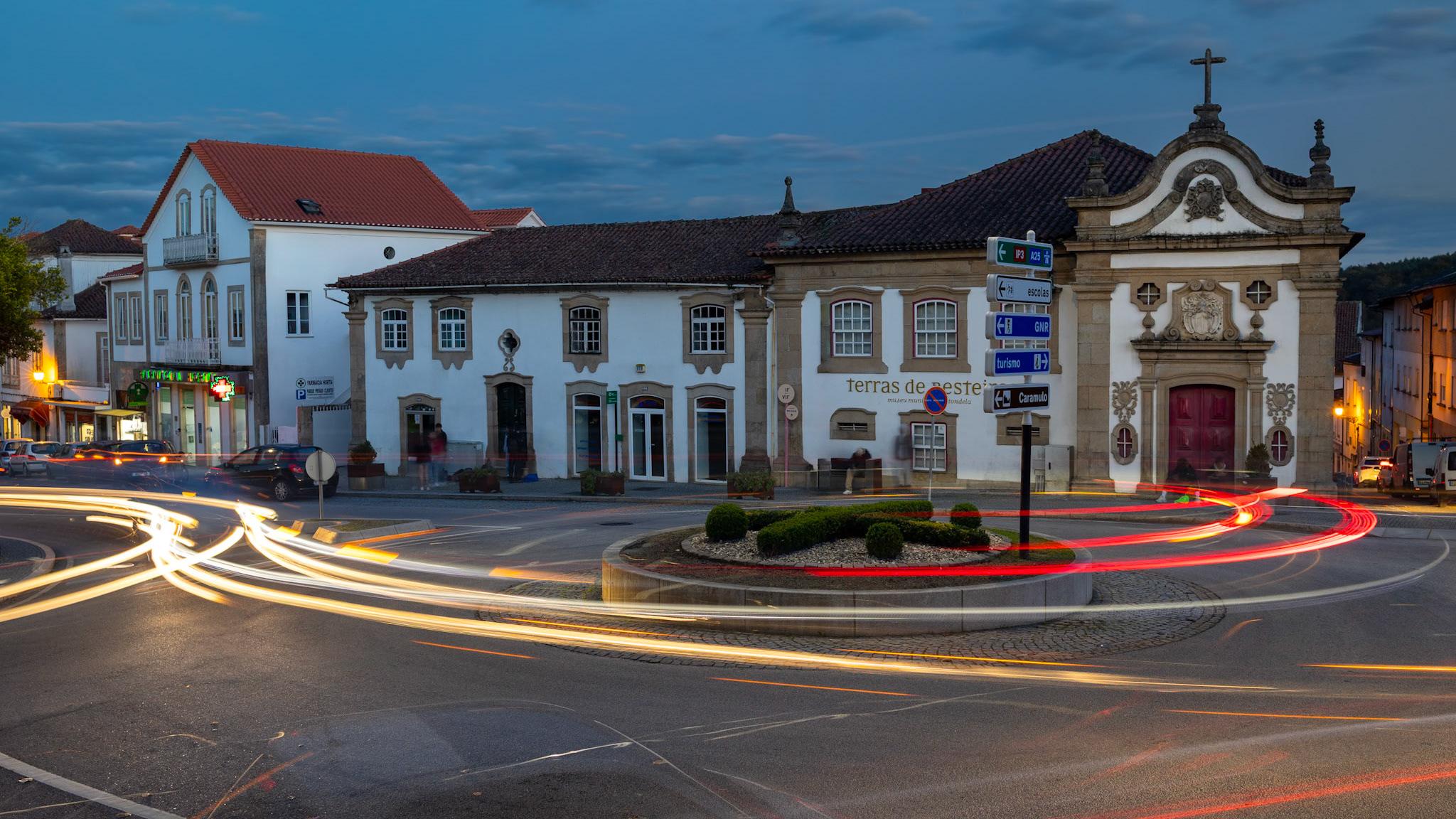
Um estudo fotográfico da tradição ancestral do Barro Preto em Molelos. Esta série documenta todo o processo — da terra ao forno — onde a argila é transformada através da antiga técnica da "soenga" em peças de um brilho escuro e metálico.
1. Introduction
1. Introdução
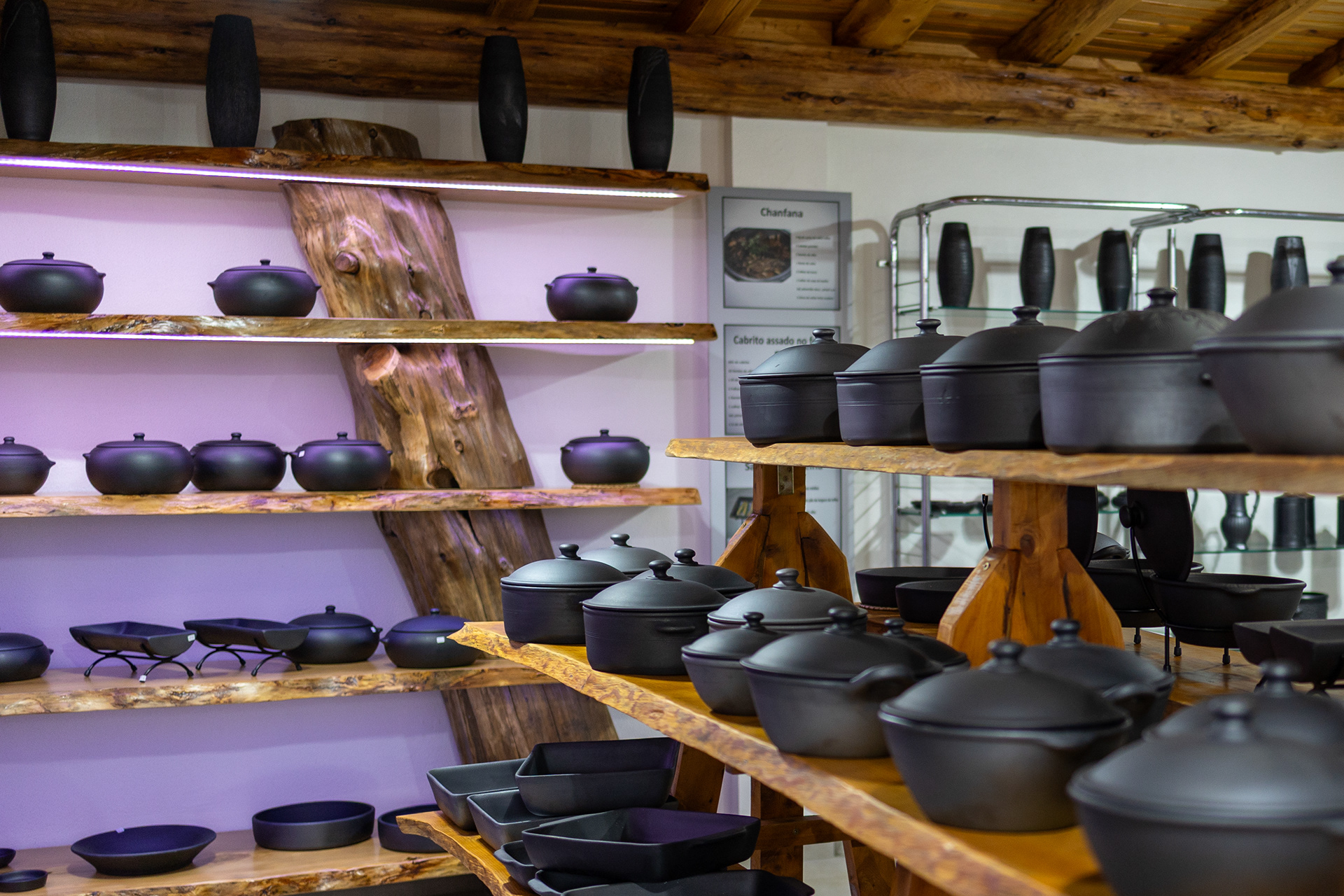
Clay is gathered in Molelinhos, a neighboring area. It is used to produce traditional utility models passed down through generations, such as secret pitchers, roasting pans, small pots, and water vessels. The ornaments are crafted entirely by hand, with motifs that are almost always geometric or botanical.
The characteristic black color of the pottery is achieved through a reduction firing process in an oxygen-deprived environment saturated with carbon. Traditionally, this was done in a shallow pit dug into the ground, popularly known as a 'soenga'. Today, this ancestral method is mostly reserved for demonstrations, while artisans rely on more practical wood-fired or gas kilns for daily production.
O barro é “colhido” em Molelinhos, um lugar anexo. Com ele são produzidos modelos legados pela tradição, tais como cantarinhas (bilhas) de segredo, assadeiras, pucarinhos ou moringues. Os ornamentos são feitos manualmente. Os motivos são quase sempre geométricos ou vegetais.
A cor preta que o barro adquire, é conseguida pelo processo de cozedura em ambiente de oxigénio reduzido e uma atmosfera carregada de carbono. Tudo isto era feito numa cova, pouco funda,
cavada na terra, popularmente conhecida por “soenga”. Actualmente o método só é utilizado em
demonstrações. Os artesãos usam agora o forno a lenha ou gás, mais prático e funcional.
cavada na terra, popularmente conhecida por “soenga”. Actualmente o método só é utilizado em
demonstrações. Os artesãos usam agora o forno a lenha ou gás, mais prático e funcional.
2. Preparing the Clay
2. Recolha e preparação do barro
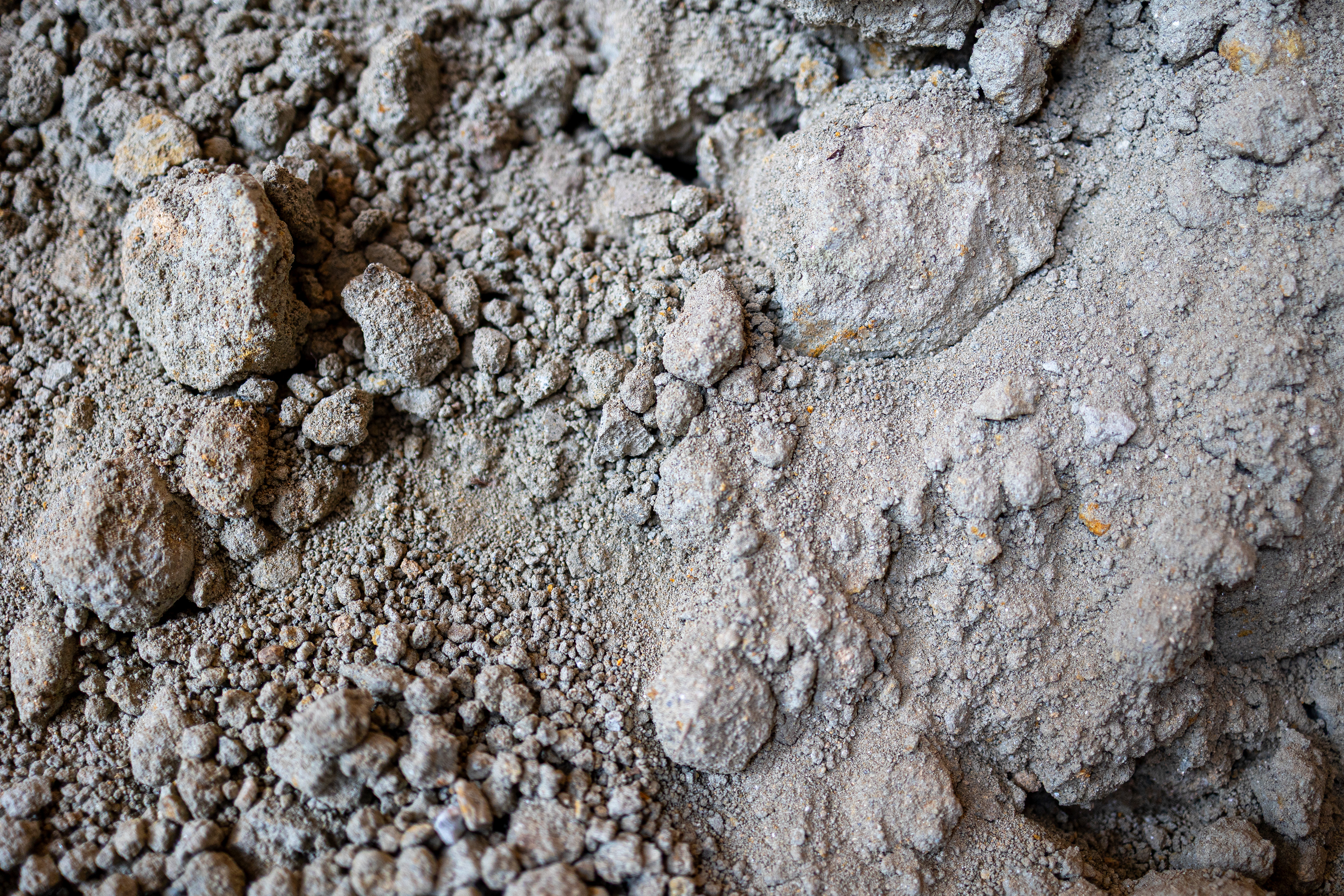
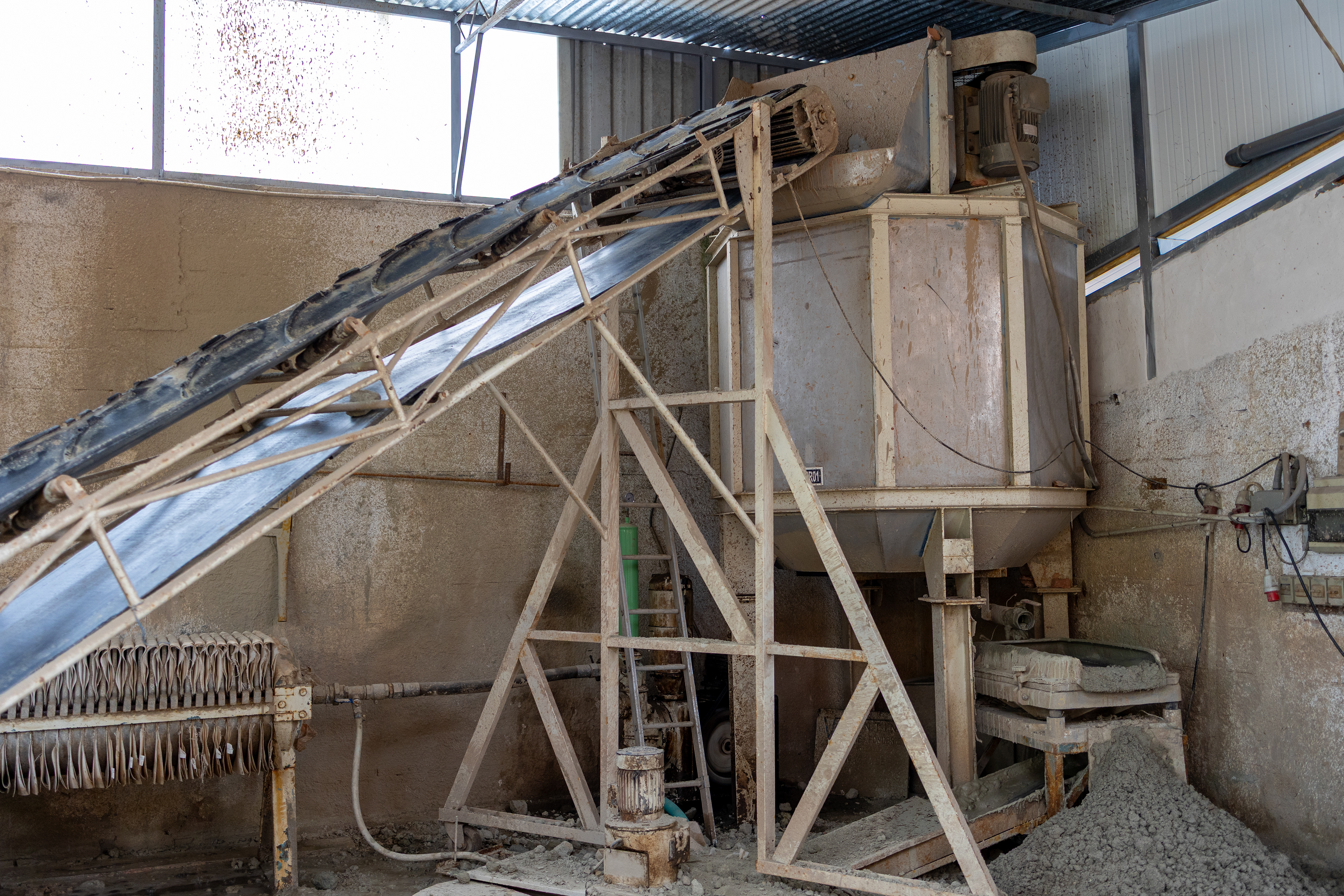
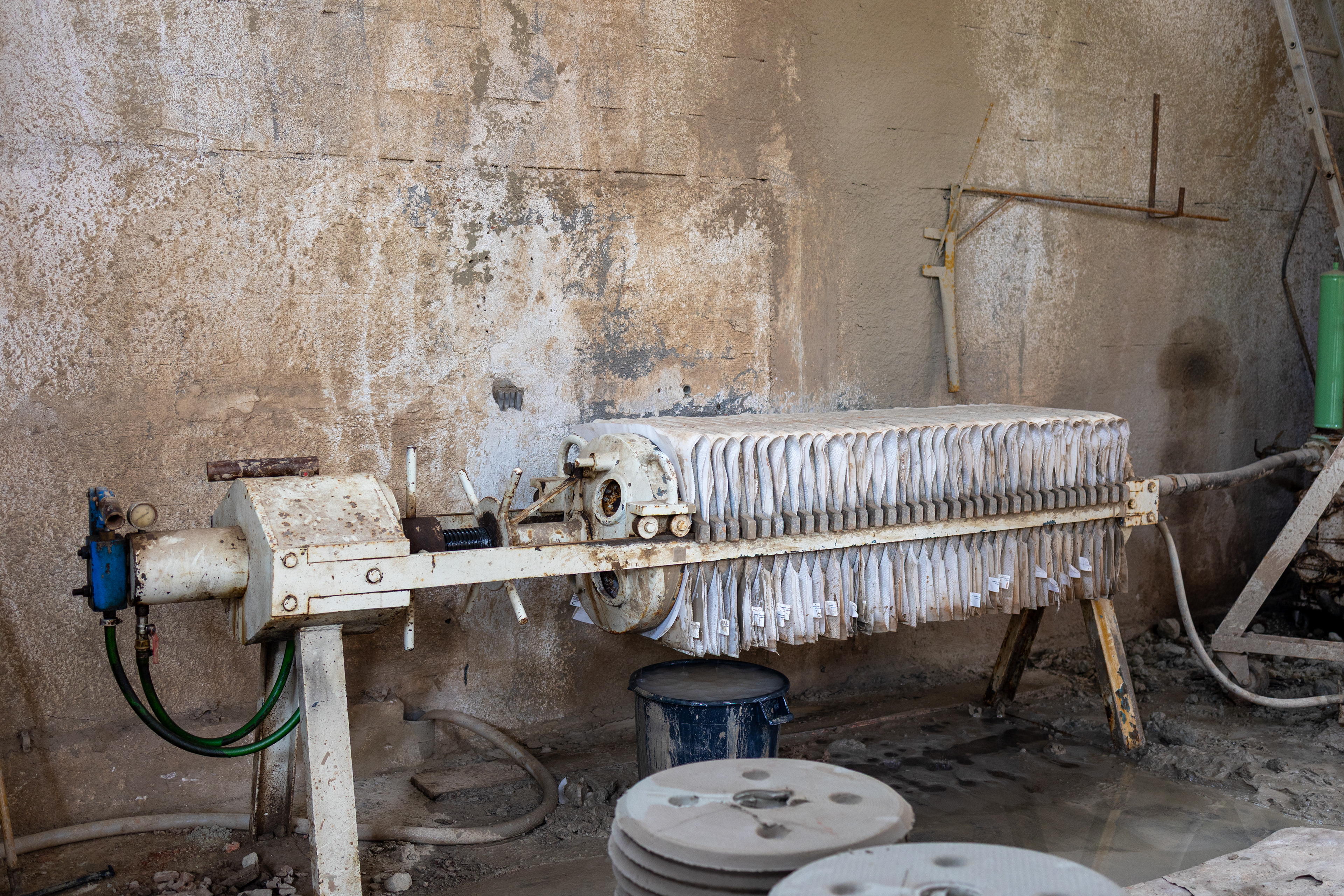
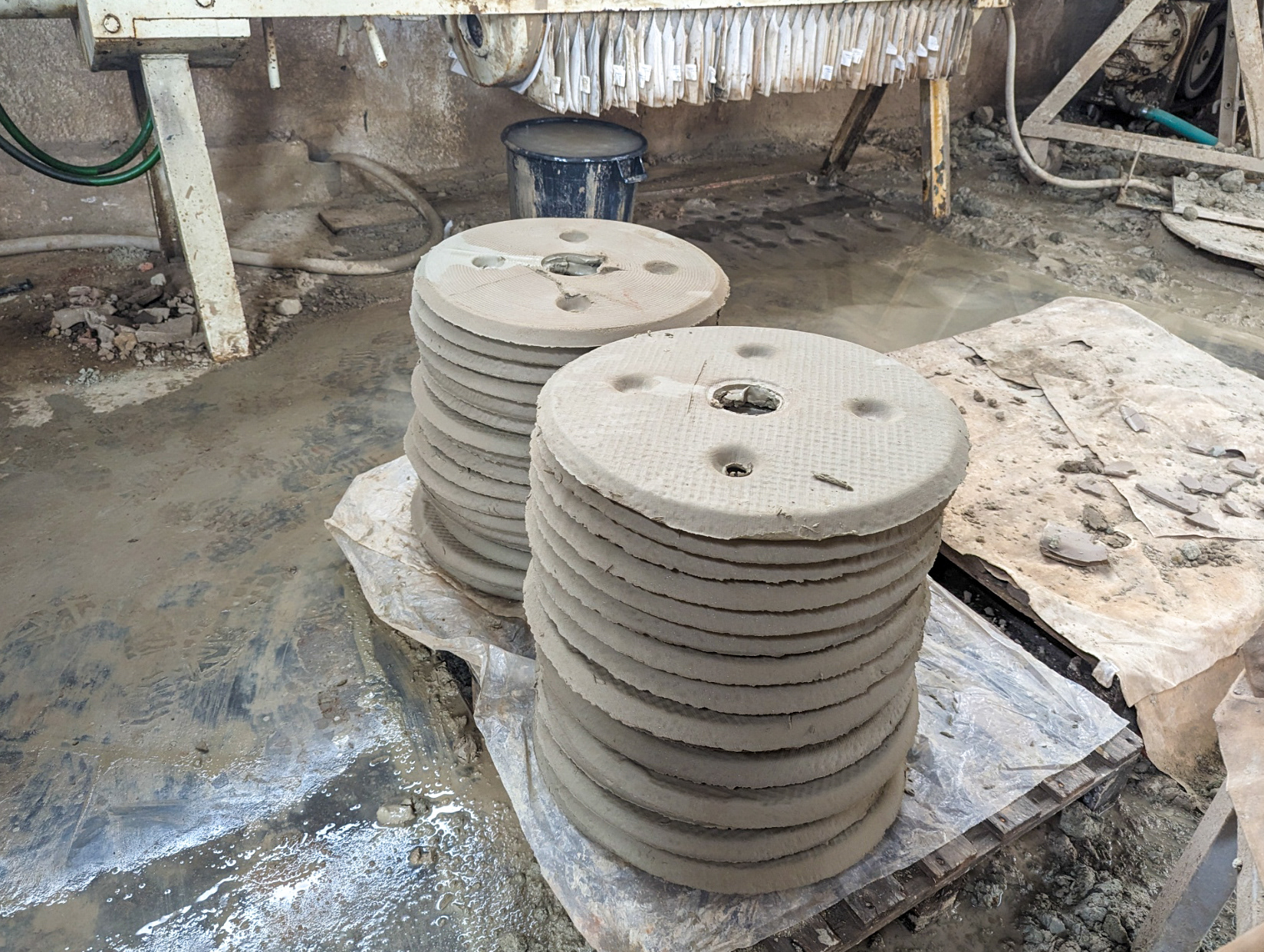
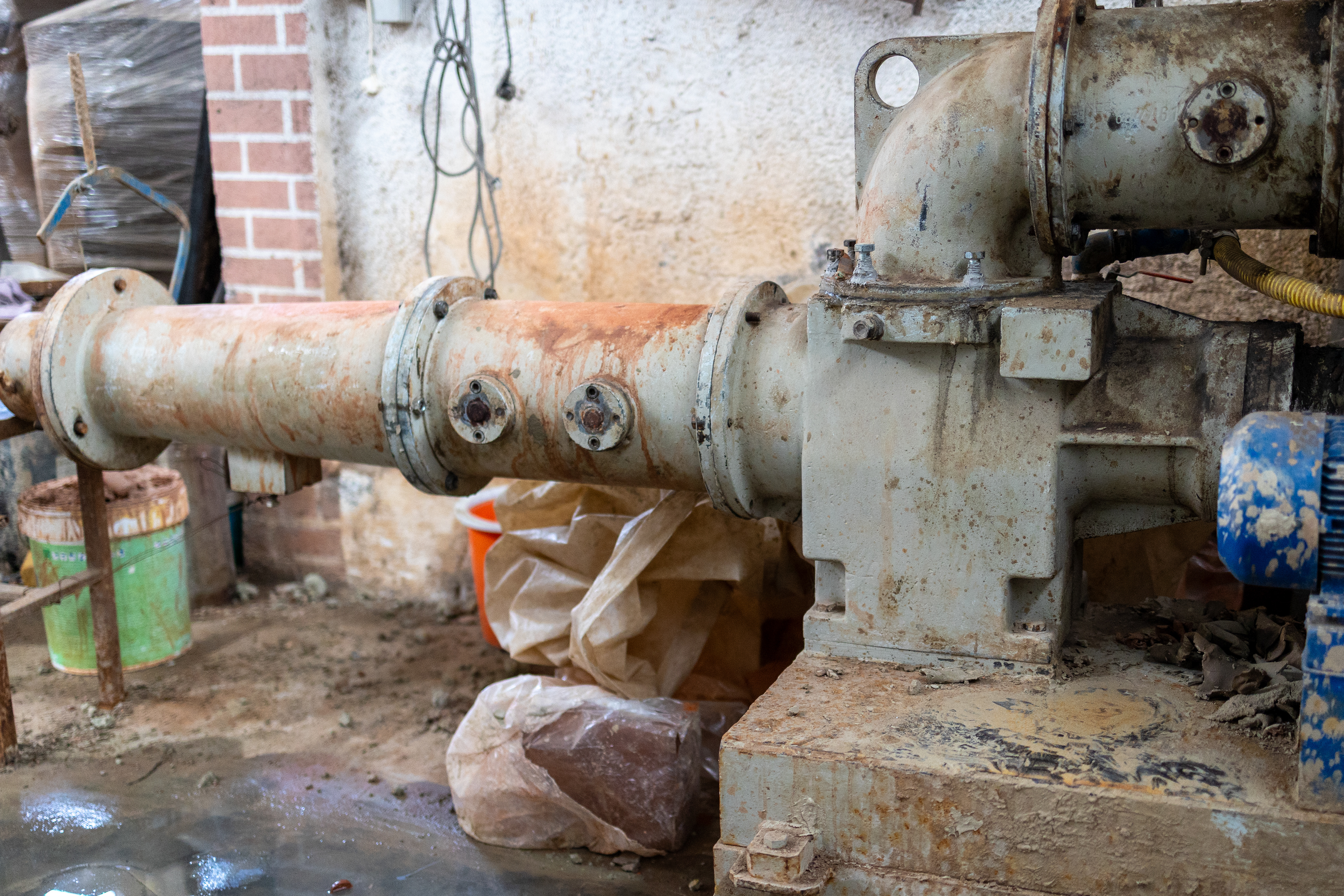
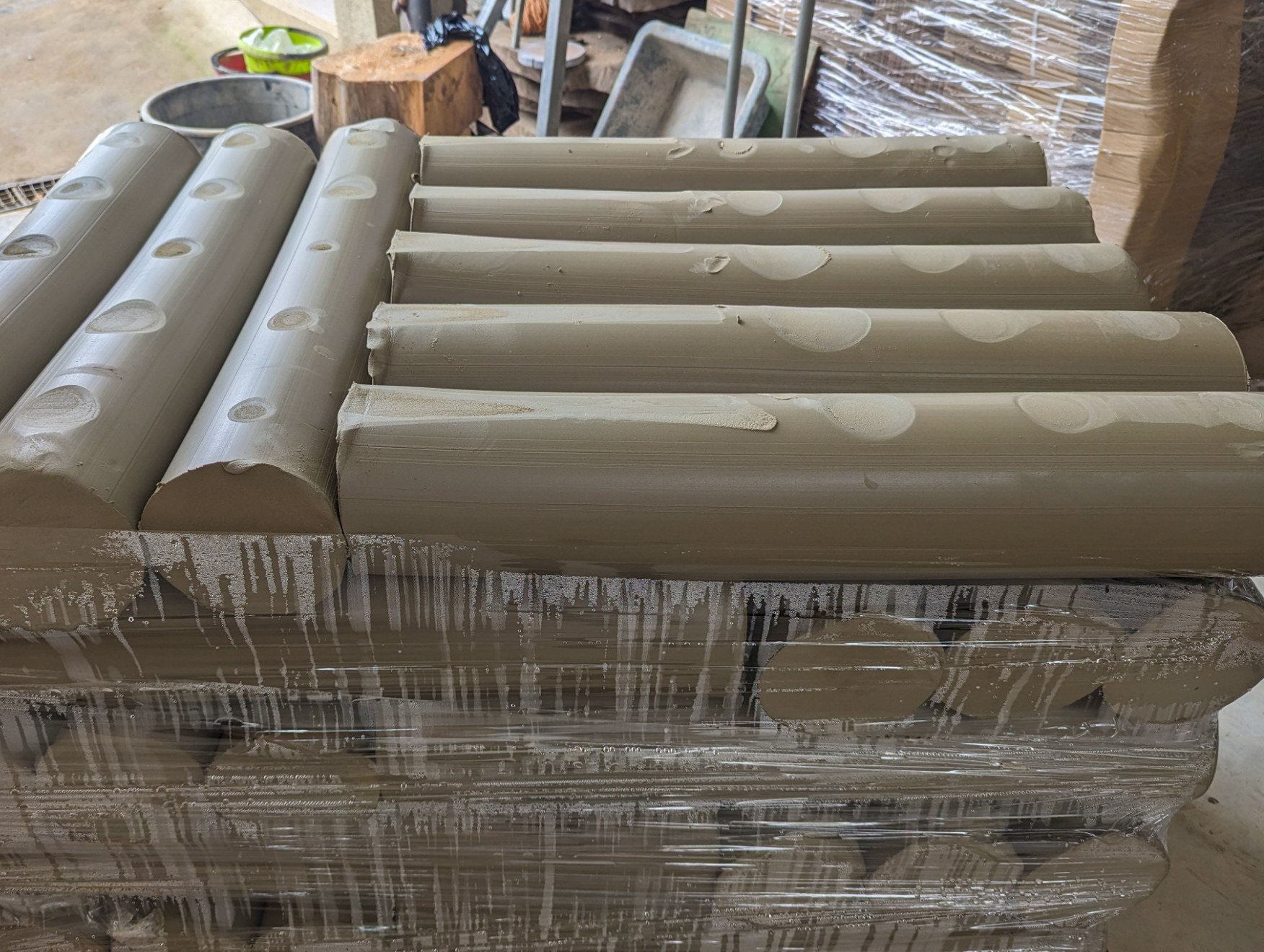
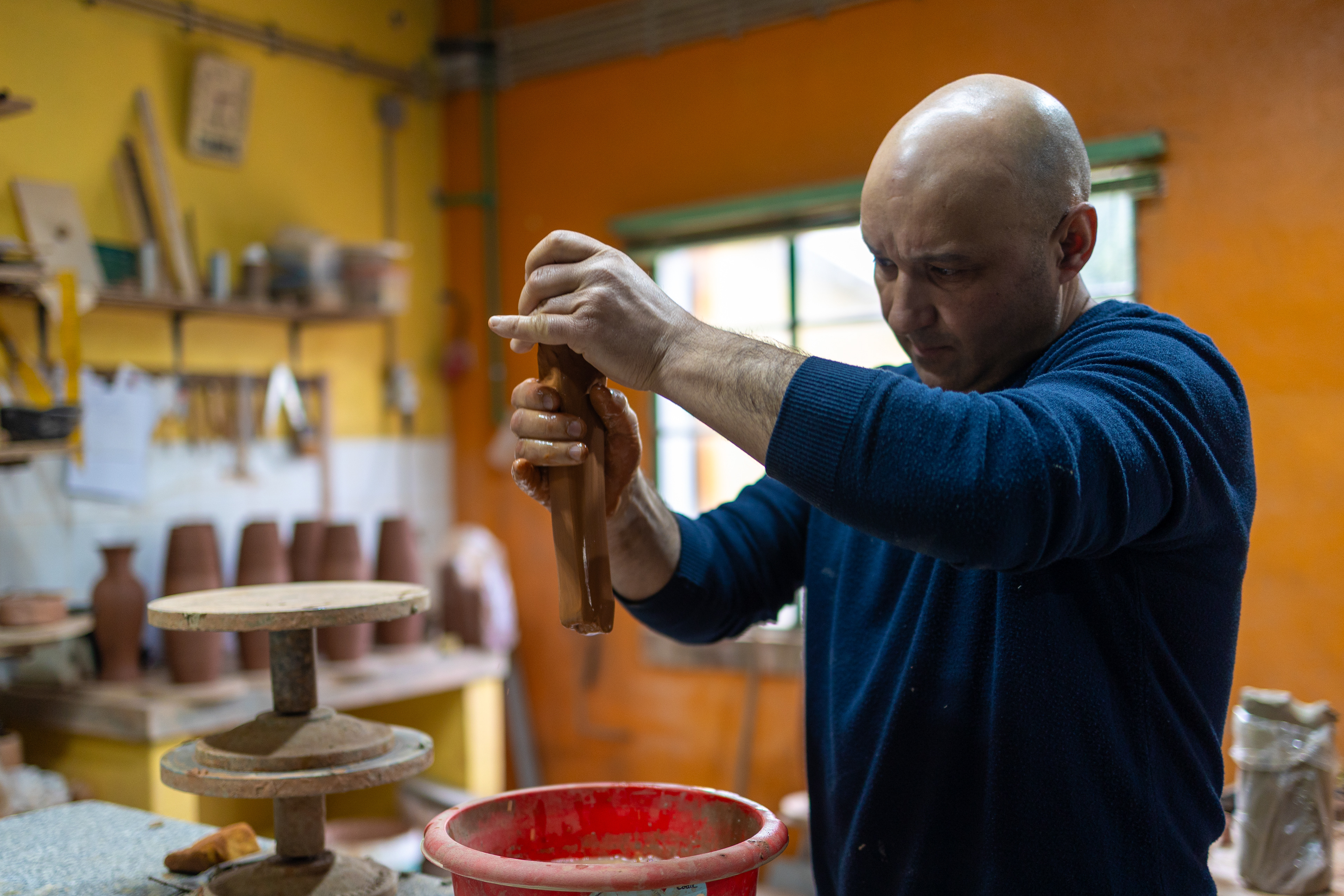
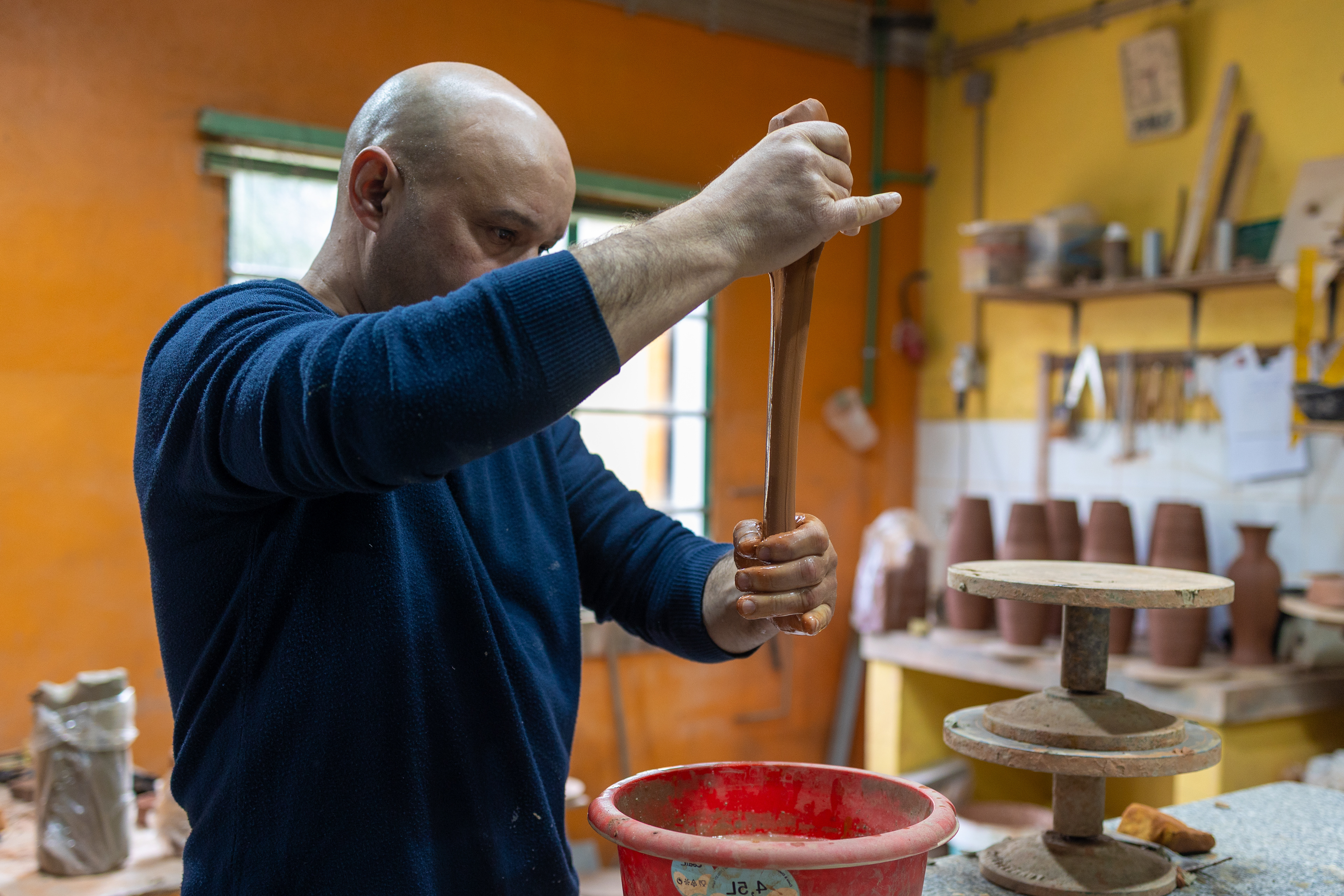
After extracting the raw material from the clay pits, it must be carefully prepared. The process begins by cleaning the clay to separate impurities, usually through sifting. The material is then transferred to a large tank where it is diluted in water to break down aggregates and homogenize the mass.
Next, it is filtered and sent to the pug mill. To adjust the clay's consistency, various types of clay and minerals (such as silica, sand, or ash) are often blended to achieve the best workability for each specific piece. Today, mechanical pug mills greatly ease this preparation stage.
Depois de extrair a matéria-prima dos “barreiros” é necessário prepará-la. O procedimento passa pela “limpeza” da argila, separando as impureza, geralmente por peneiração. De seguida, o material é passado para um recipiente, habitualmente chamado tanque, onde é diluido. Ao dispersar em água, está-se a separar os agregados e a homogeneizar a massa que se vai trabalhar. De seguida é filtrado e segue para a fieira. Para alterar a consistência do barro são frequentemente misturadas várias argilas e inertes (sílica, areia, cinza, etc.), de modo a obter a melhor resposta do material, em função do tipo de trabalho a realizar. Atualmente, a fieira mecânica facilita a preparação do barro.
3. Shaping the Clay
3. Moldar o barro
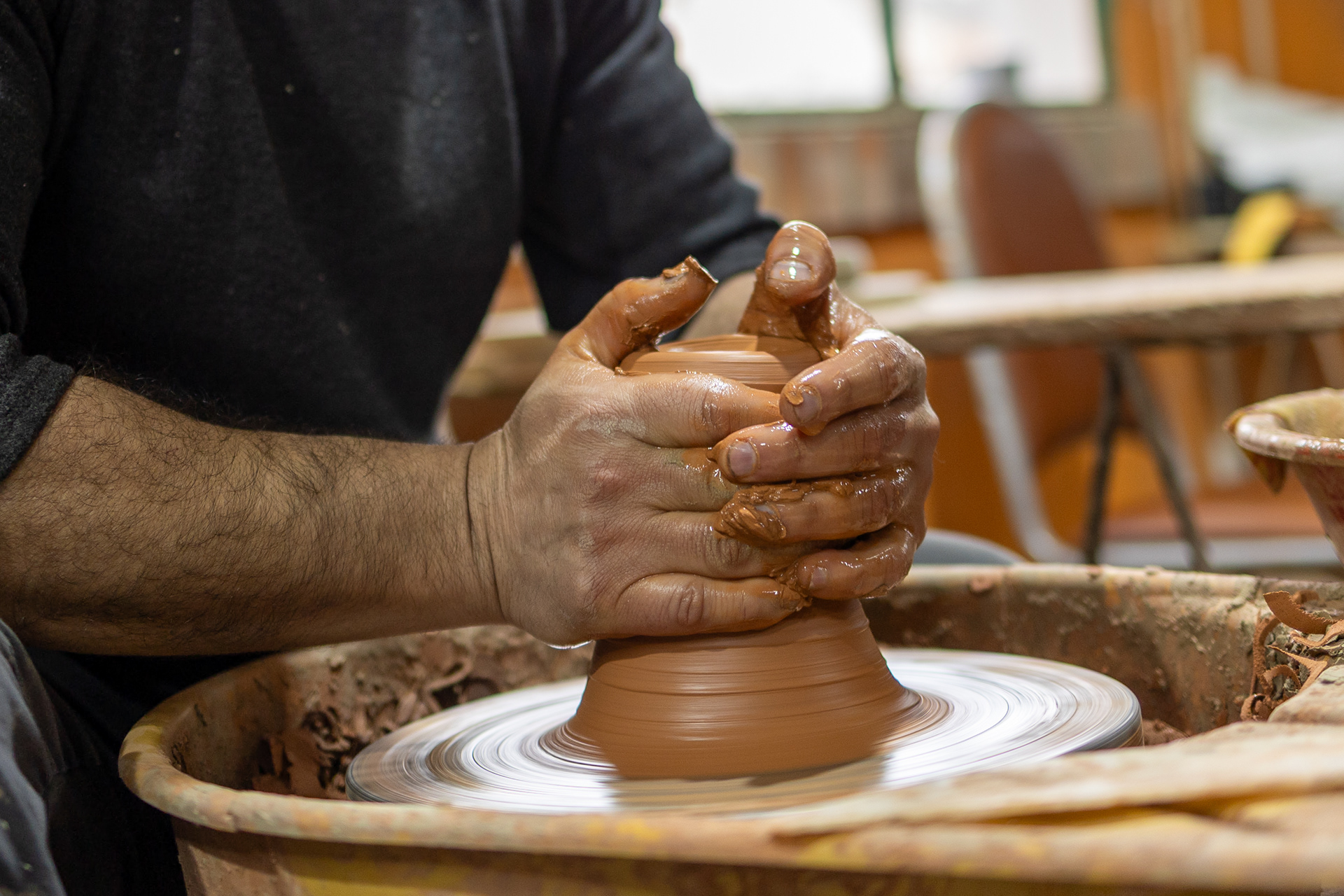
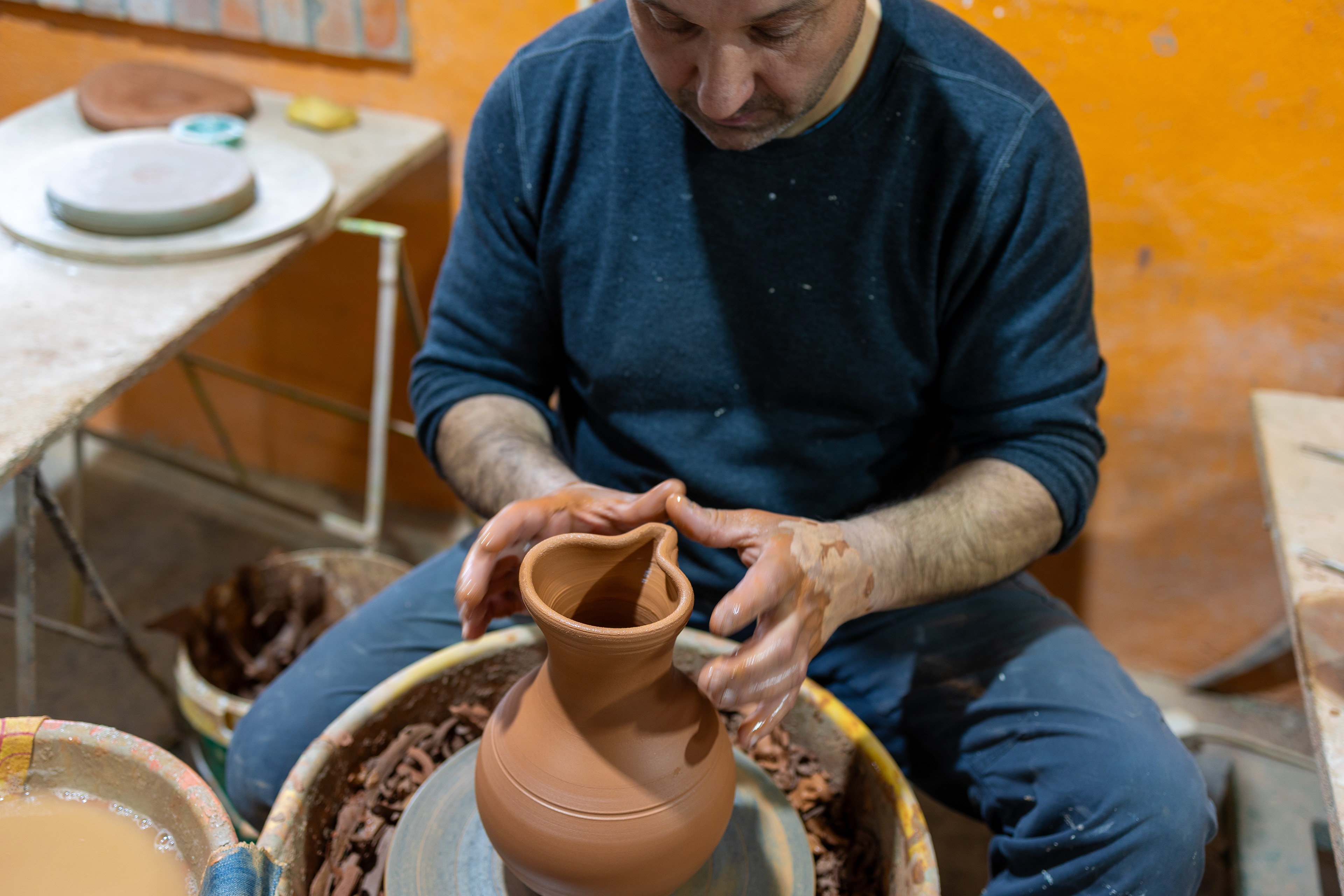
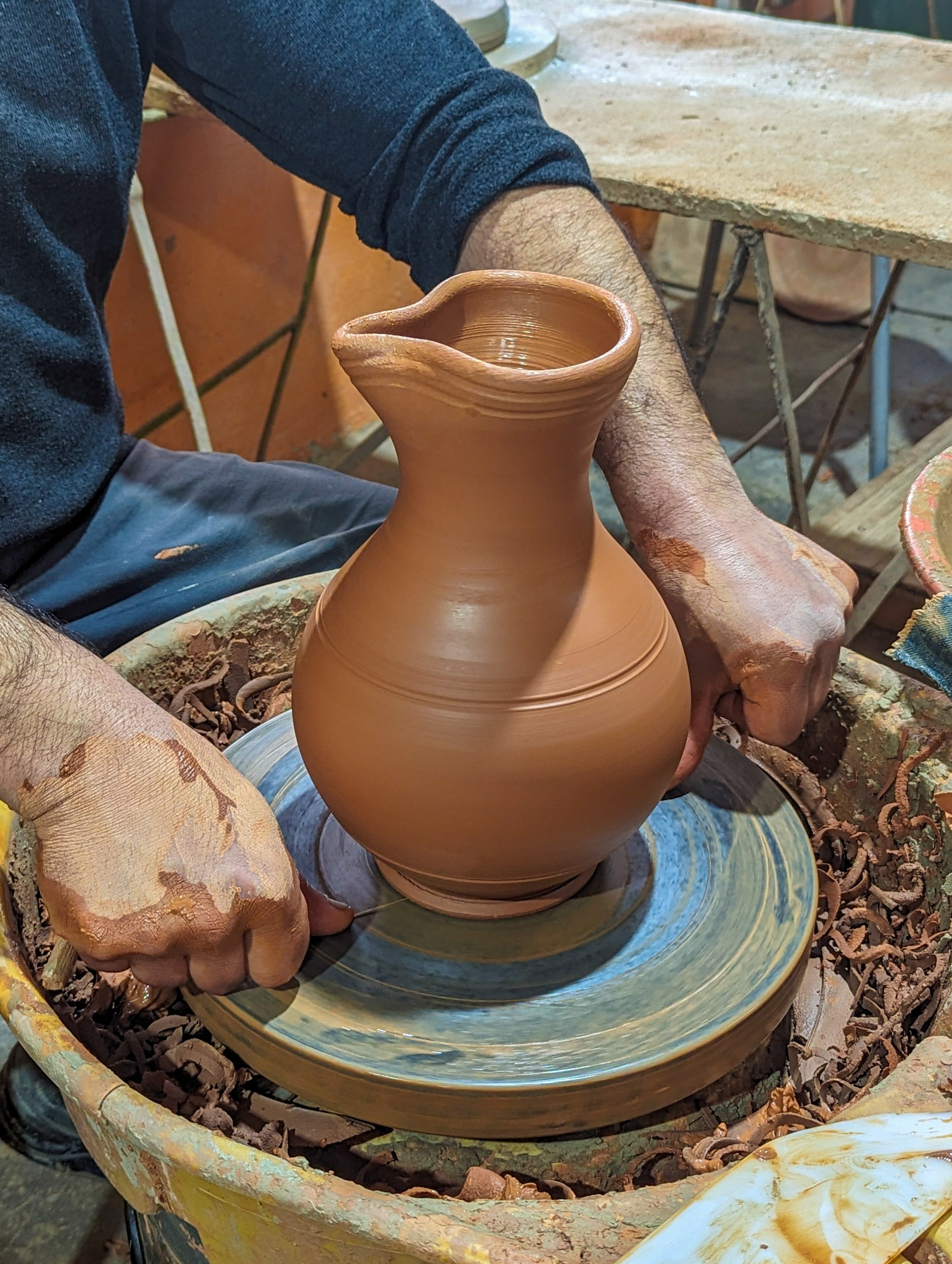
The potter's wheel remains the primary tool of the craft. Nowadays, electric wheels allow the artisan to focus all their effort entirely on shaping the piece. With wet hands, the potter begins to mold what will soon become a pitcher. Along with the wheel, they rely on simple tools: a bowl of water, a piece of cloth or sponge, acrylic or cardboard ribs, and a wire cutter to detach the finished piece.
A roda é o equipamento principal do oleiro. Actualmente, a roda é eléctrica, movida por um motor que permite ao oleiro concentrar os esforços na modelação da peça. Com as mãos molhadas começa a moldar o que em breve será a nossa peça, um jarro. Além da roda, o oleiro recorre a outros utensílios como uma taça de água, um pedaço de tecido ou esponja, pedaço de acrílico e/ou um cartão, e o “garrote” ou fio para a retirar a peça da roda.
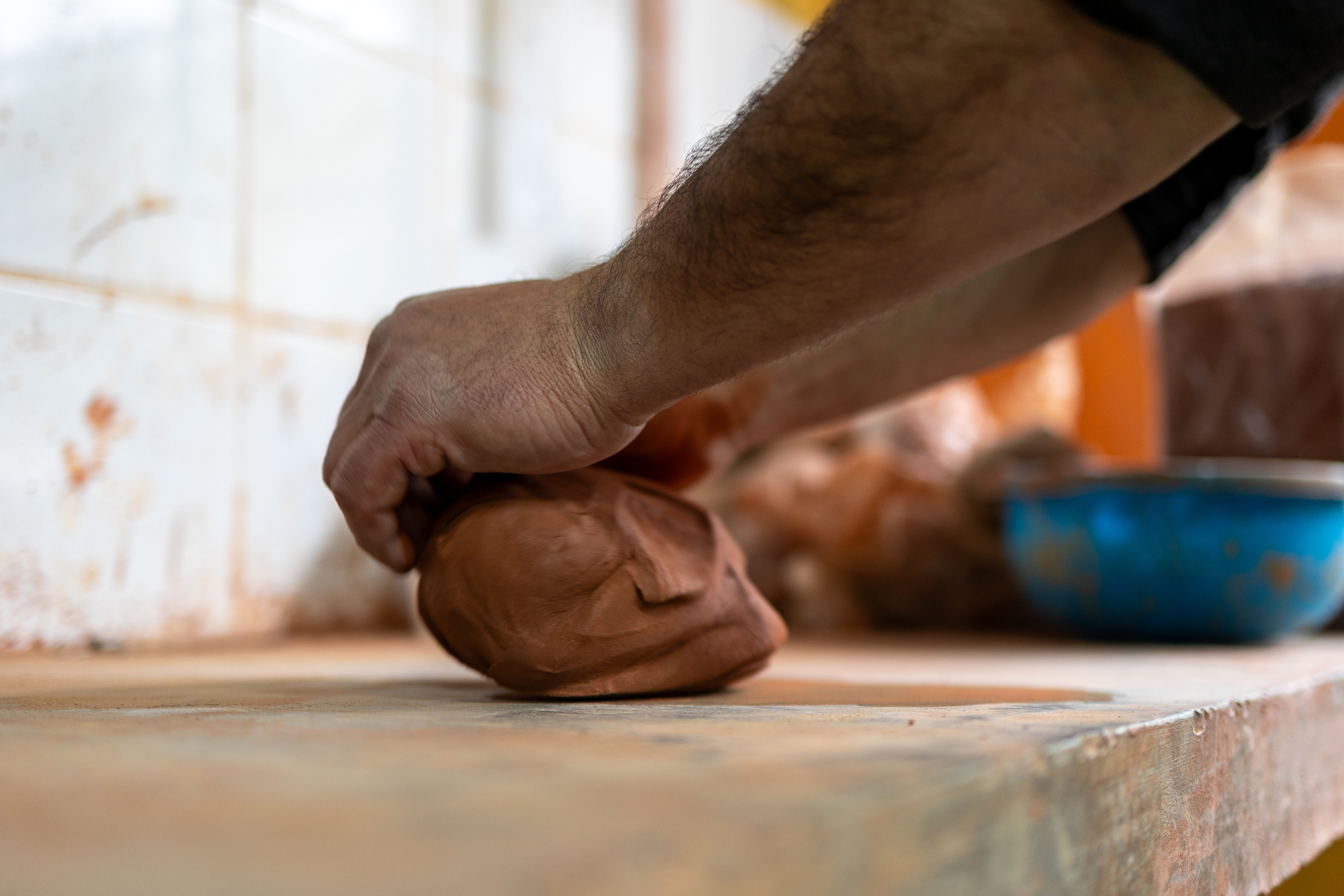
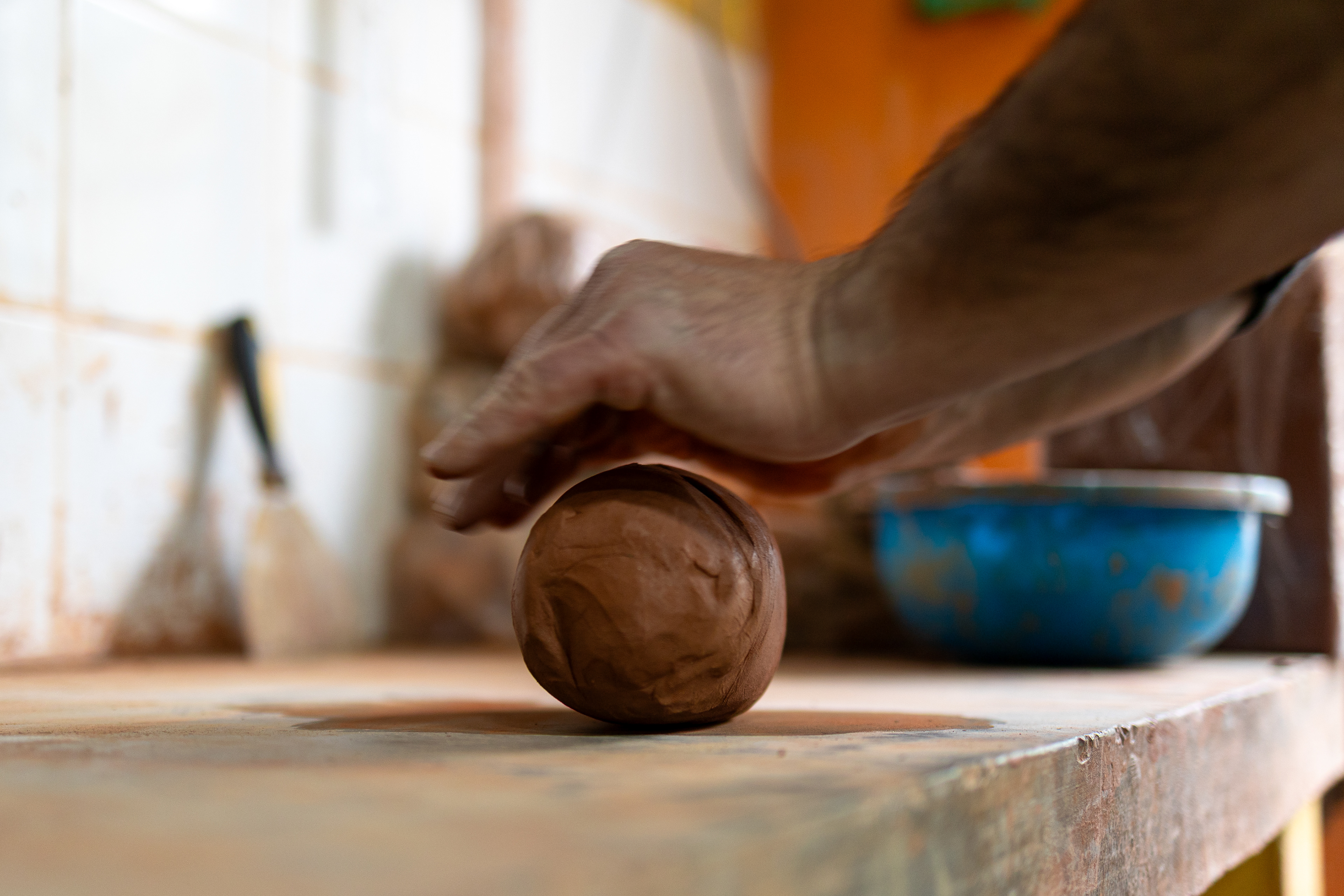
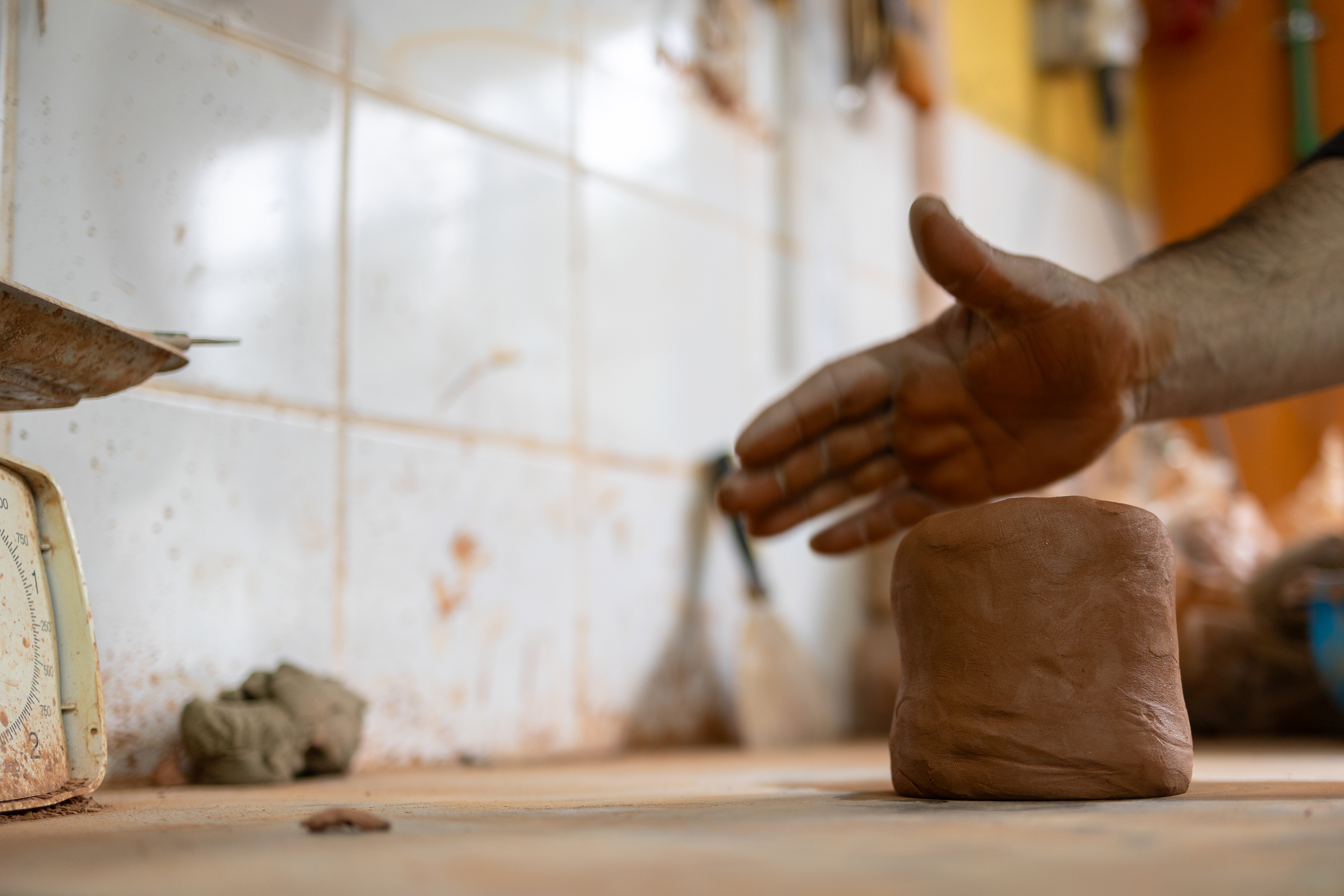
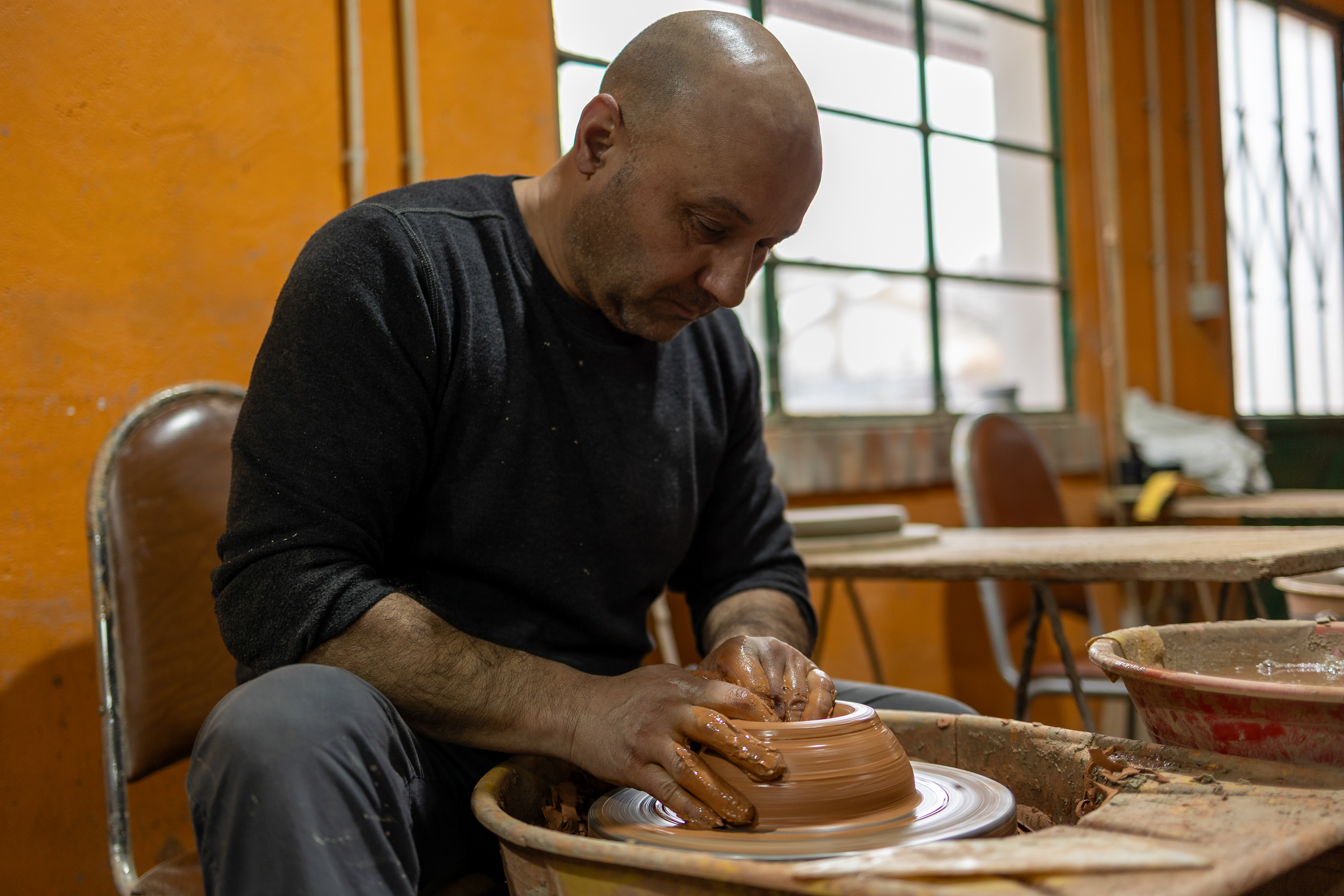
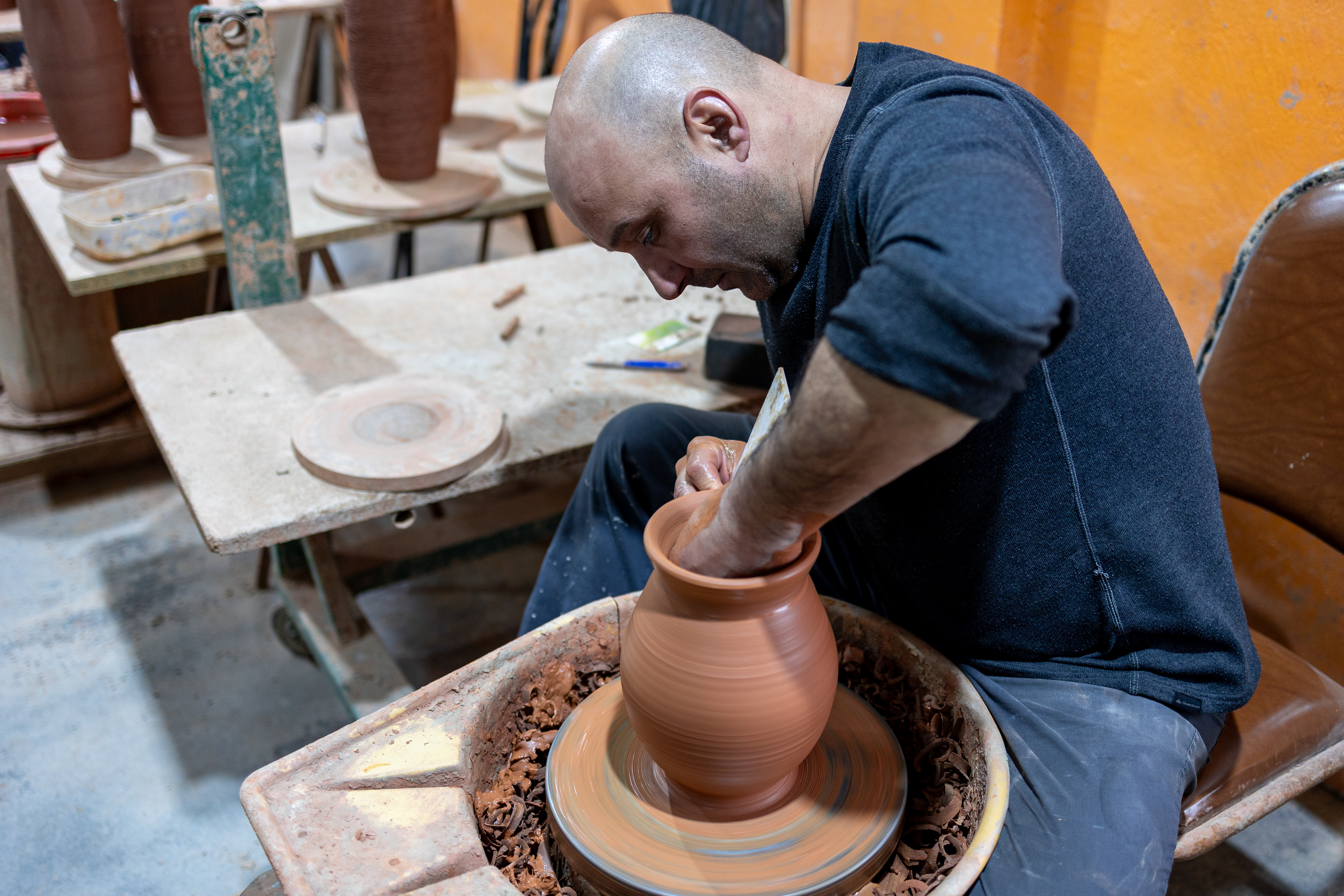
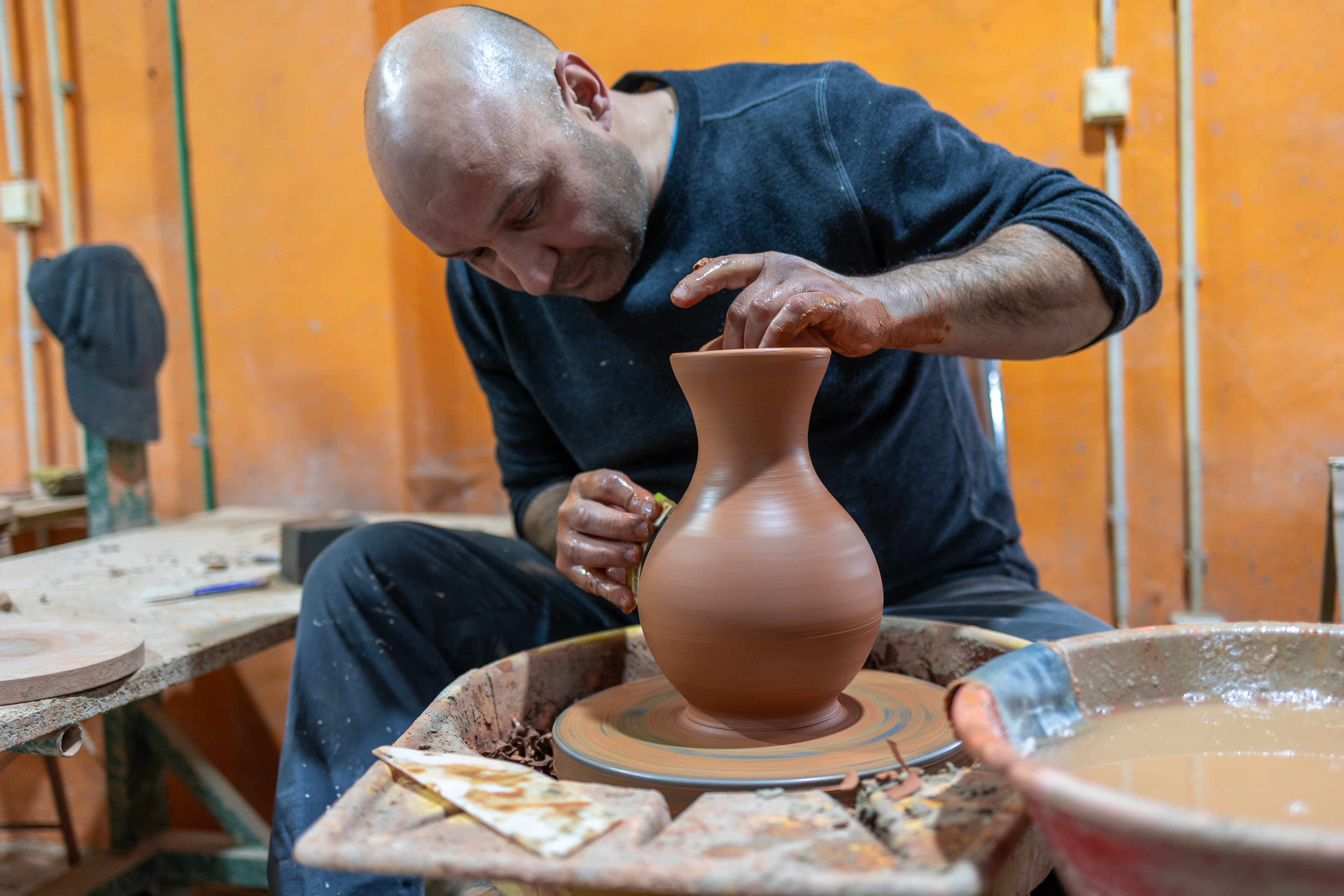
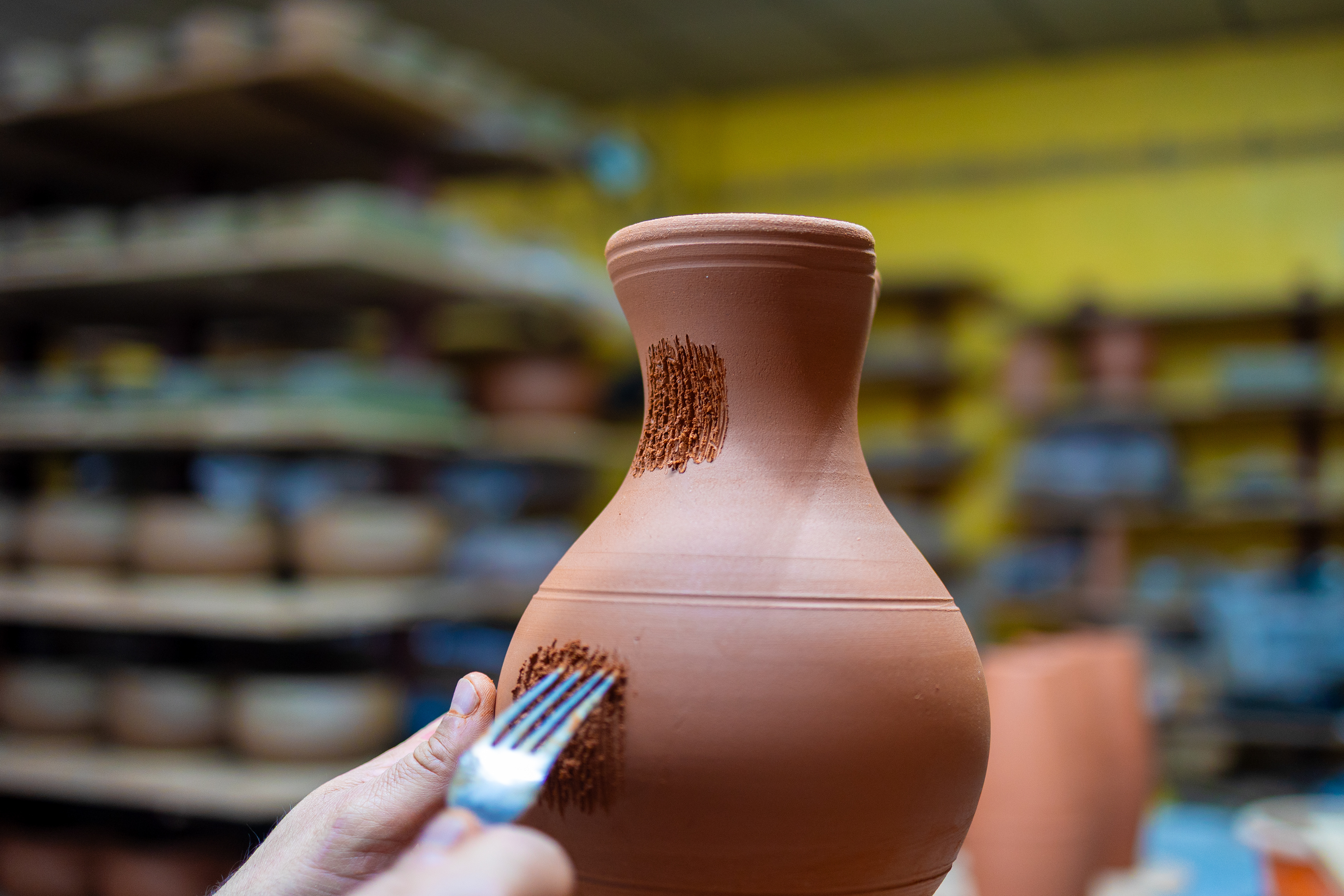
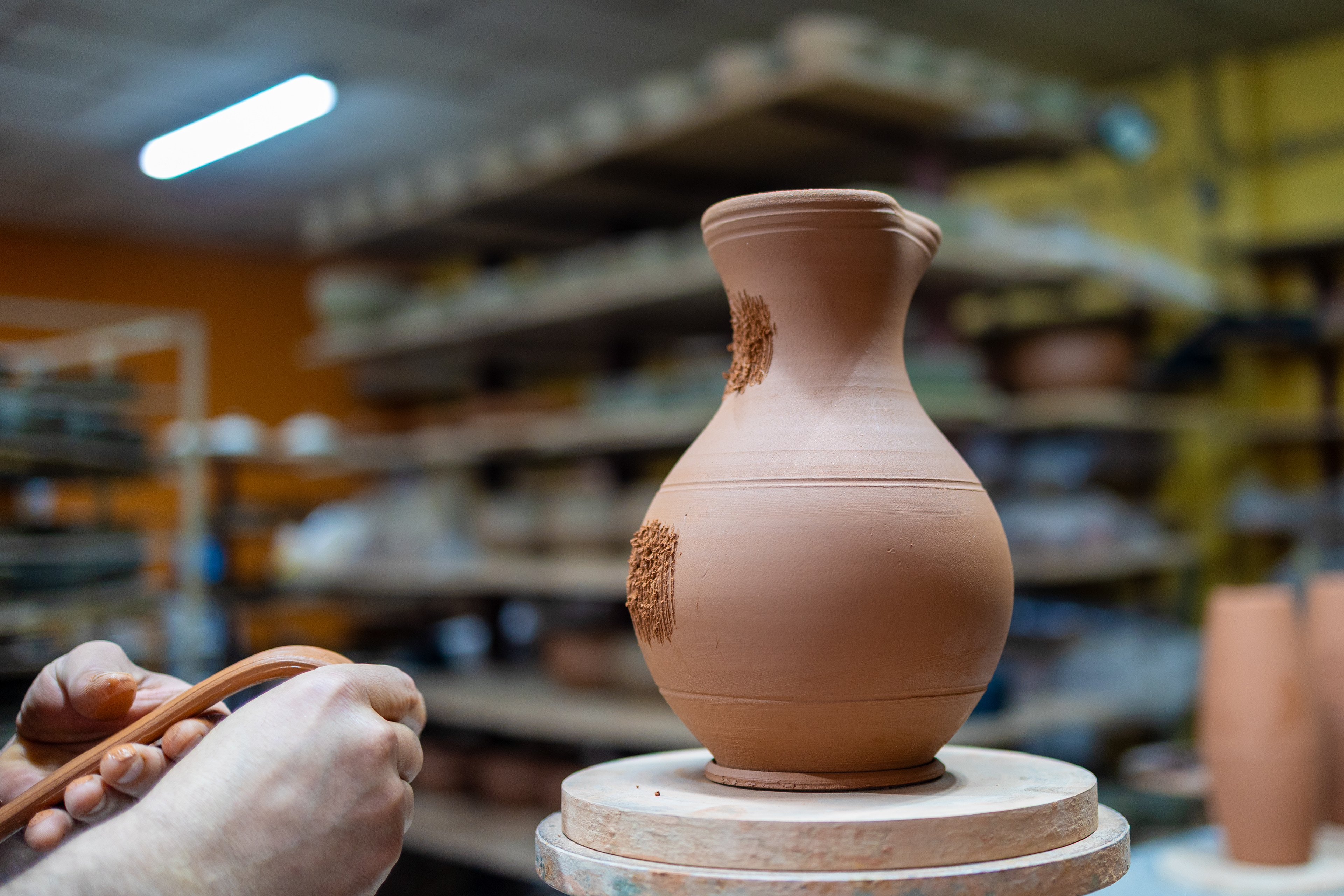
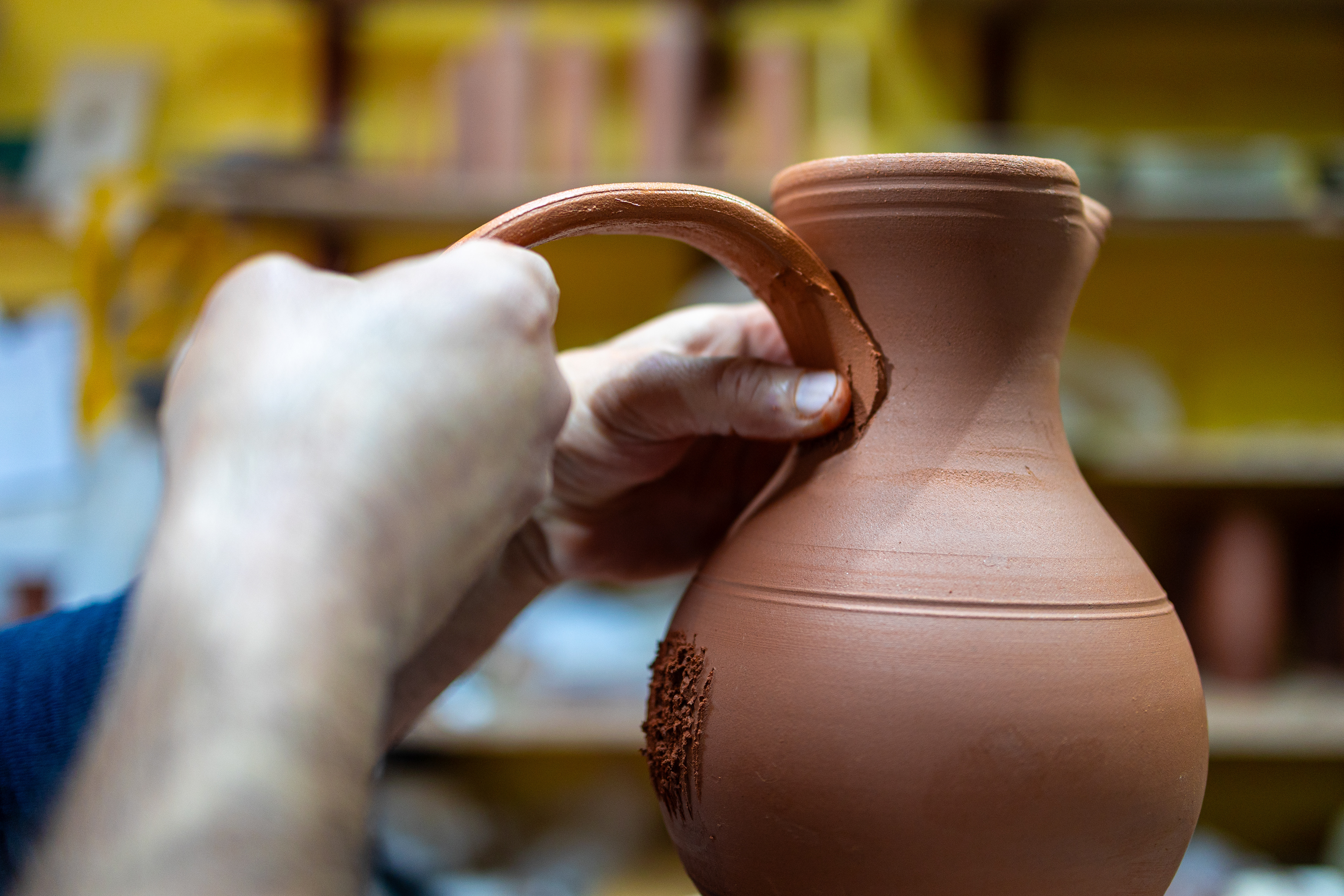
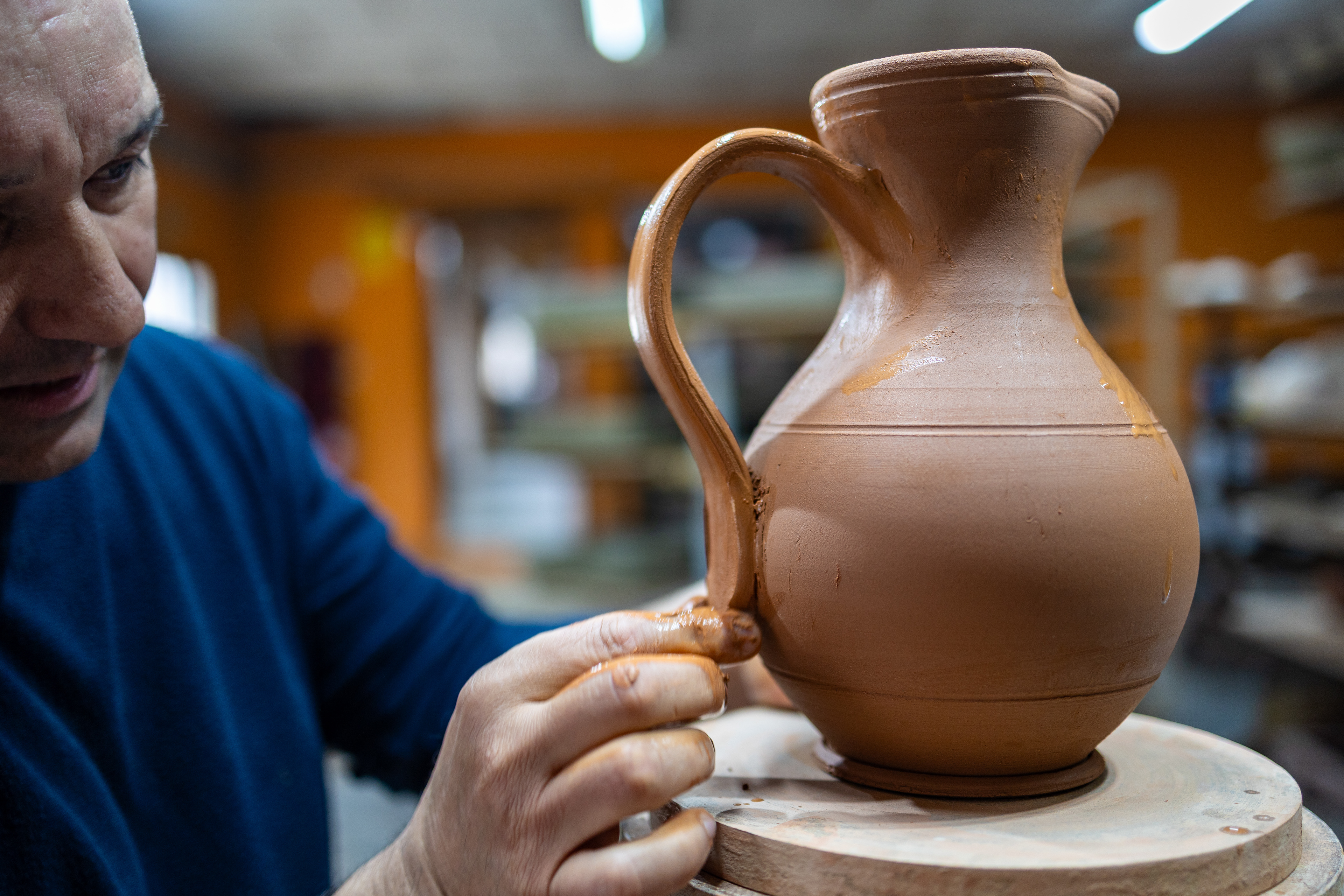
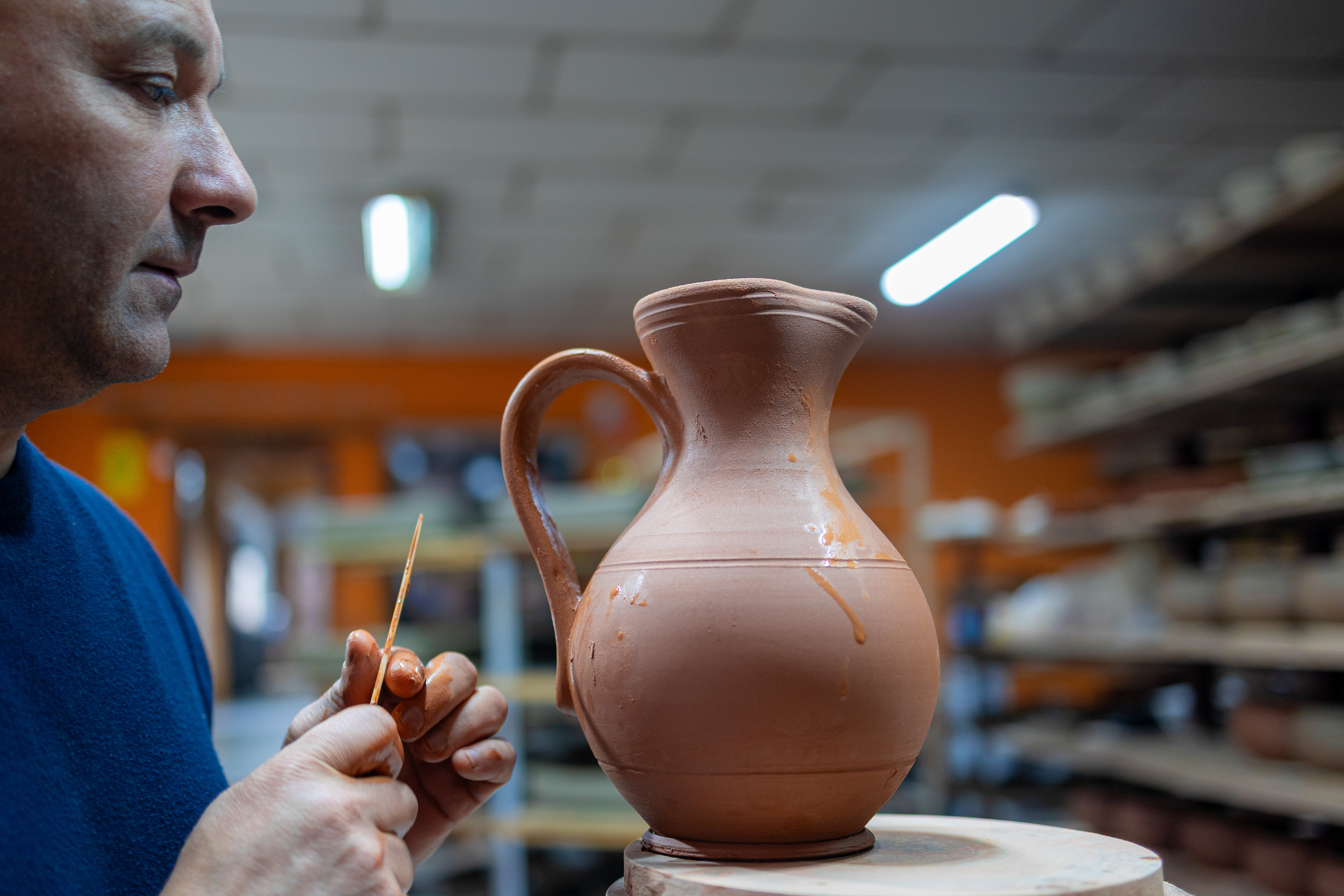
With years of experience, the piece quickly takes shape under the potter's hands. Every detail is meticulously crafted. Our pitcher will require a handle, meaning the piece must now dry for at least 2 to 3 days. Even pulling a 'simple' handle demands immense expertise. The drying stage must be slow and thorough before firing, depending on the size of the piece and the local climate, to prevent any potential cracking.
Com toda a sua experiência, a peça não demora muitos minutos até ganhar forma. Cada detalhe é feito com pormenor para que não falhe nada. O nosso jarro precisa de uma asa e por isso é necessário deixar a peça secar, pelo menos 2 a 3 dias. Mesmo o processo de uma “simples” asa requer bastante experiência. A secagem deve ser lenta e completa, antes do processo de cozedura, variando pela dimensão da peça e das condições climáticas do lugar. Isto vai evitar possíveis fissuras na mesma.
4. The Finish: Burnishing
4. Acabamento: brunir
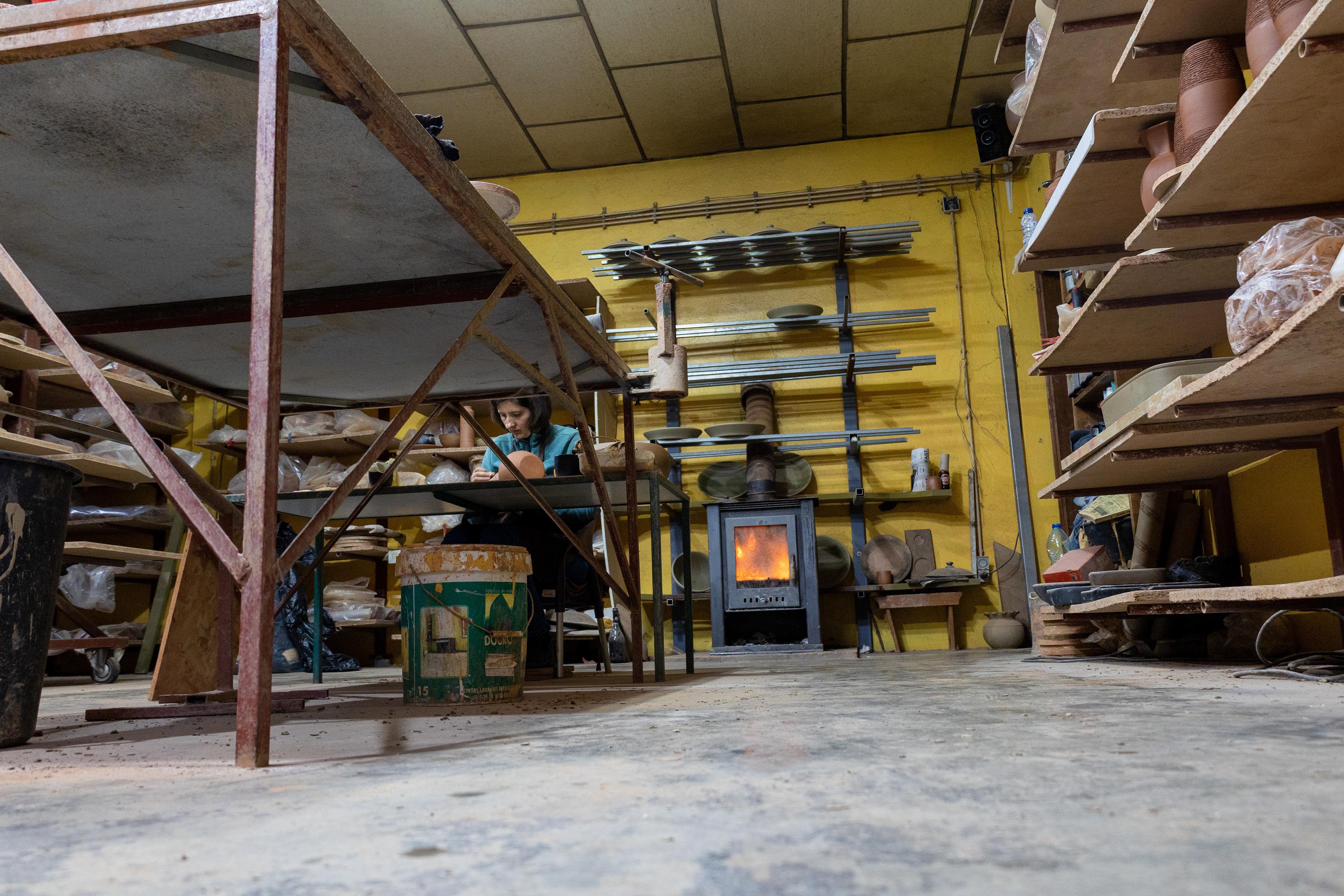
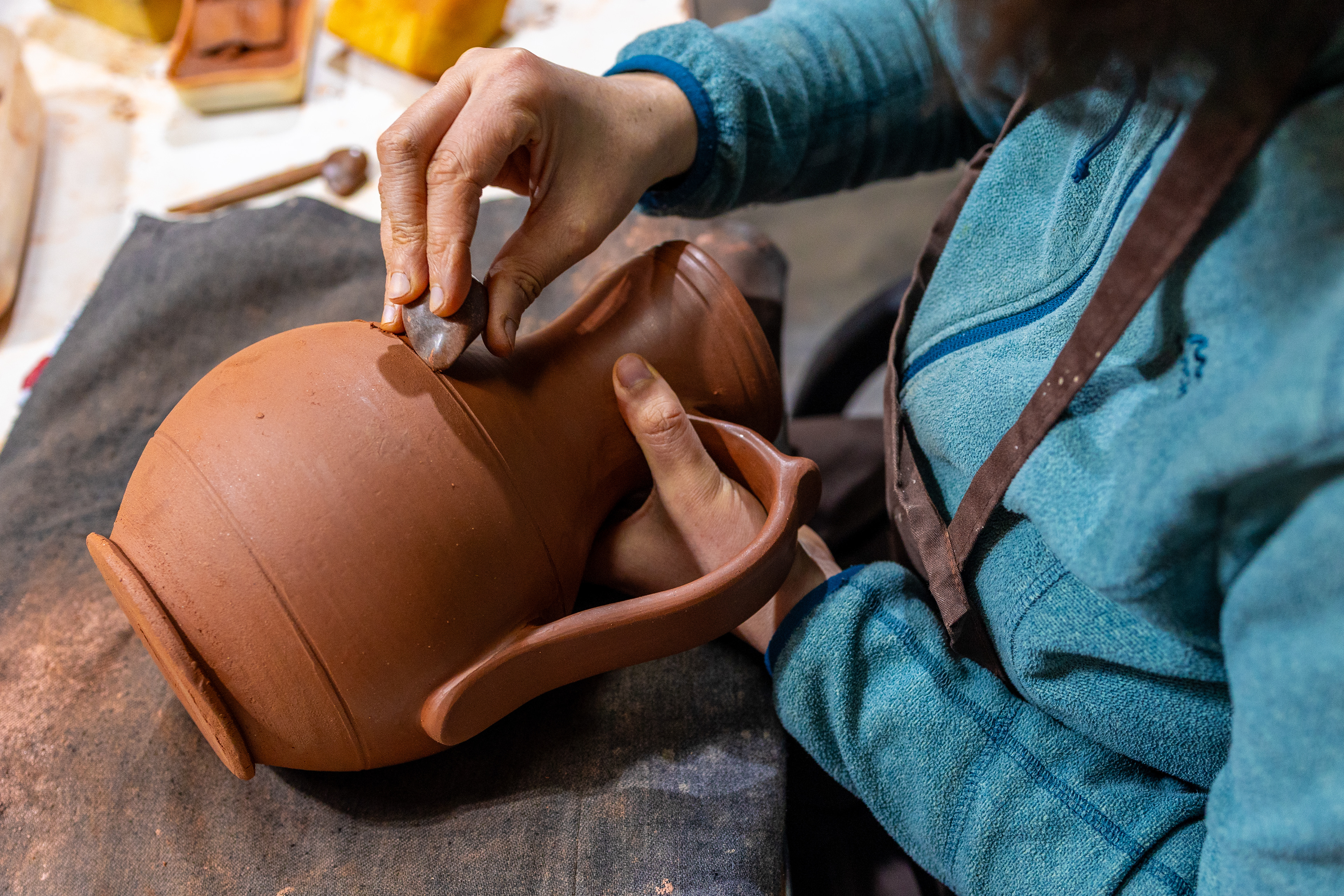
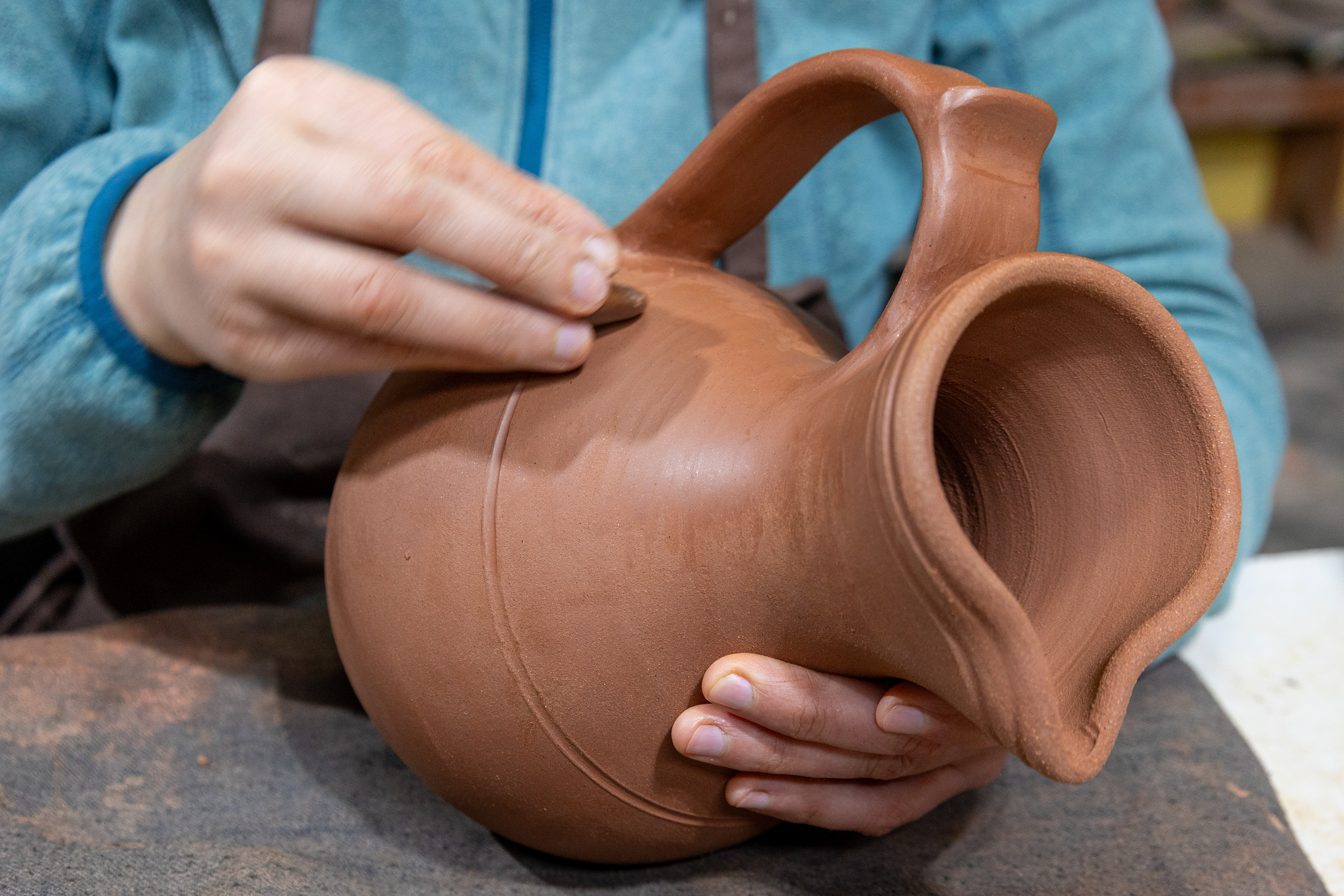
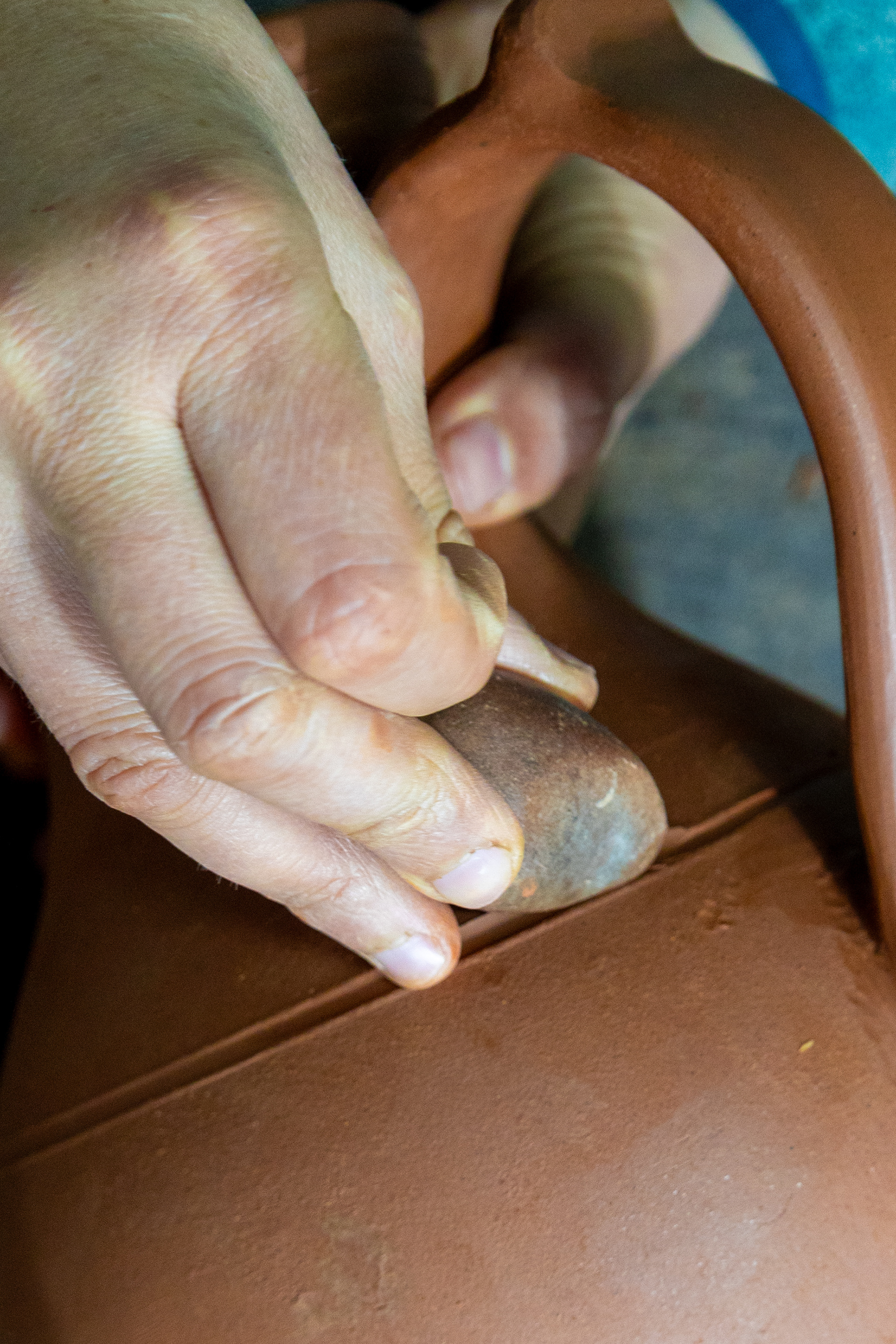
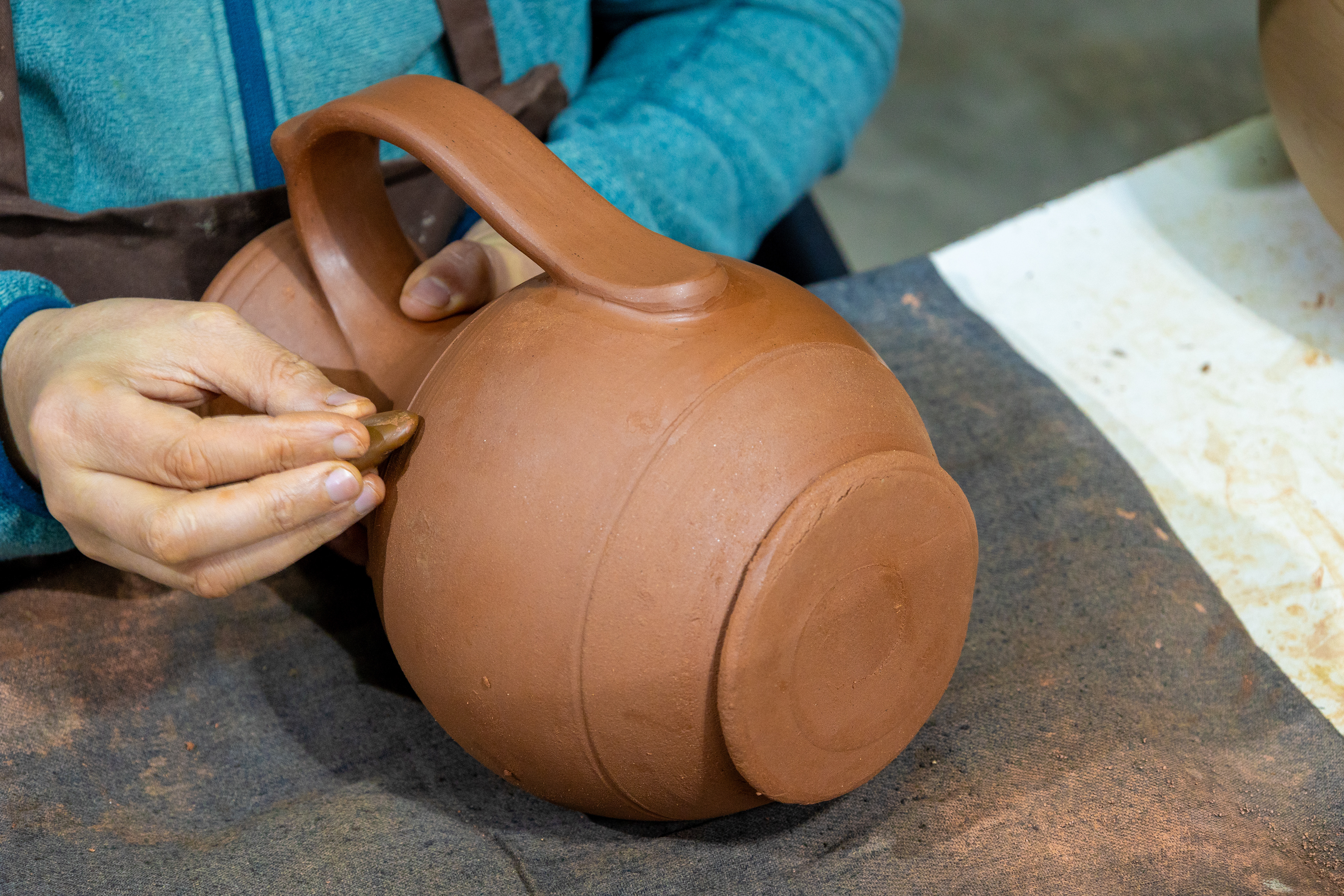
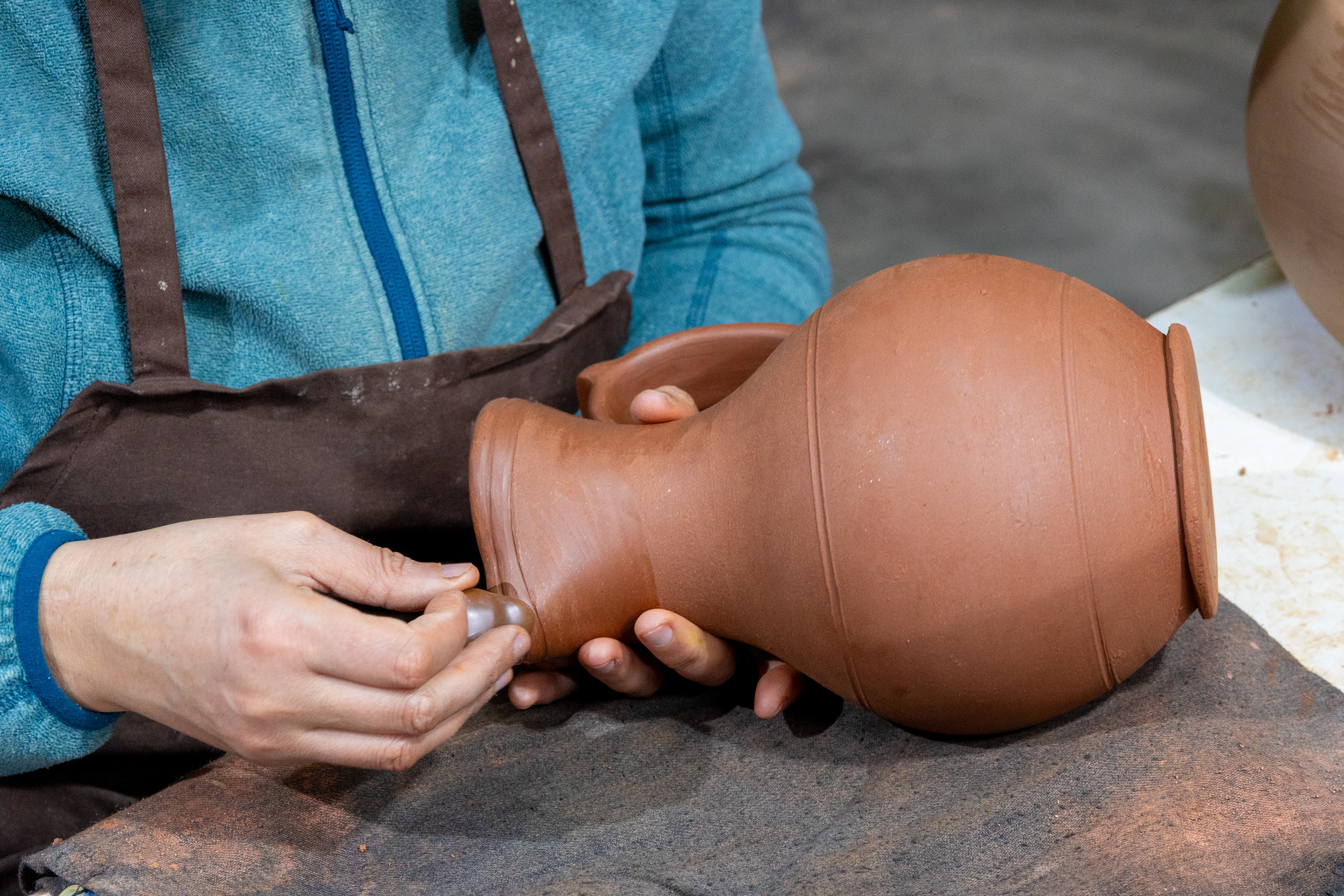
Burnishing is the act of polishing the clay to give it a metallic, almost glossy finish. This process is done using a smooth river stone halfway through the drying stage, when the clay already offers some resistance but the surface remains soft enough to receive the polishing effect. This slow, deliberate process creates a smooth, uniform surface, makes the piece more impermeable, and removes any remaining imperfections.
Brunir... Assim se chama o ato de polir a peça para lhe conferir um ar metálico, quase brilhante. Este processo é realizado com um seixo rolado a meio do processo de secagem, quando o barro já oferece resistência e a superfície é ainda macia para receber os efeitos do polimento, que confere um acabamento liso e uniforme à superfície, tornando-a mais impermeável. É um processo lento que também serve para remover imperfeições da peça.
5. Decorative Elements
5. Elementos decorativos
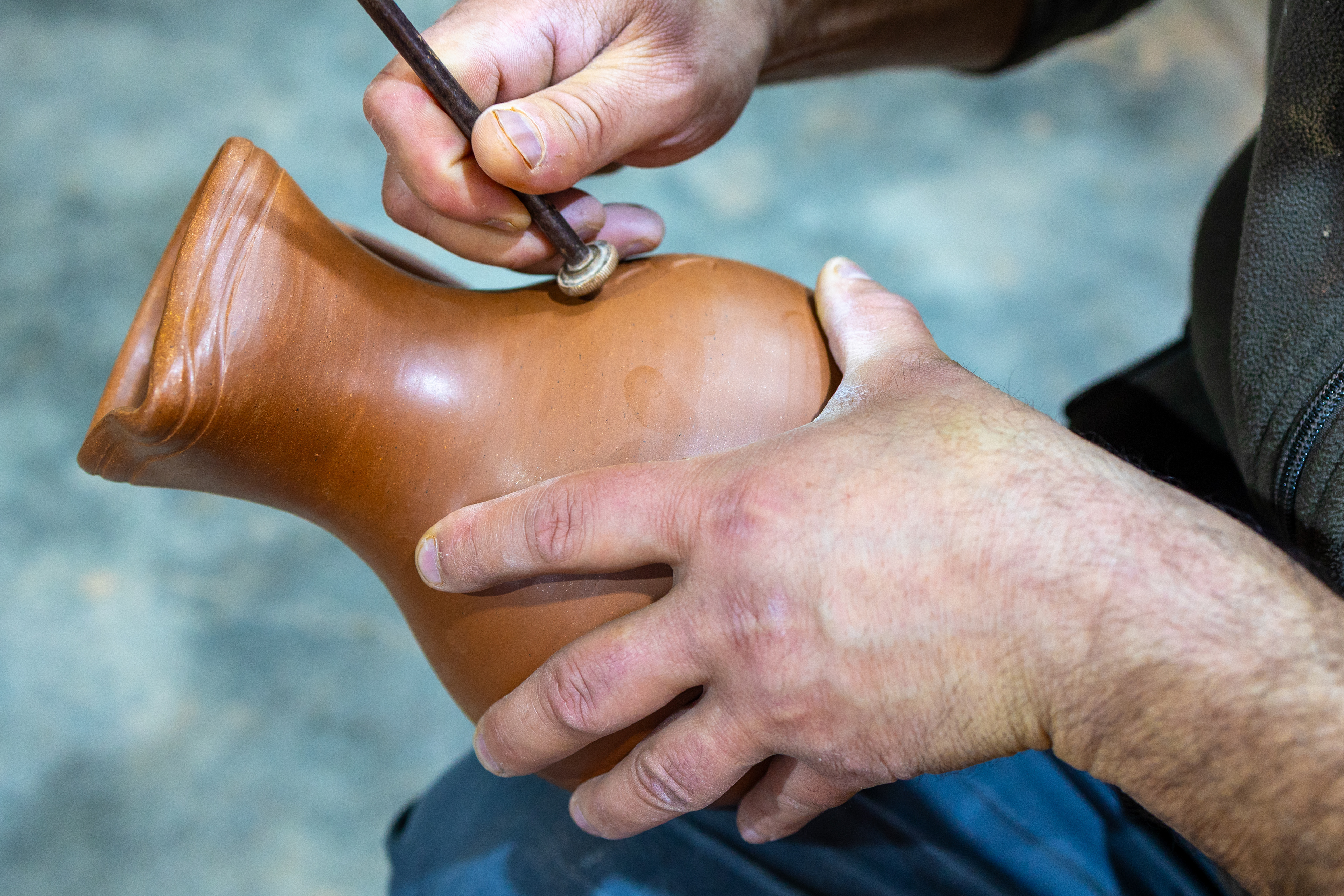
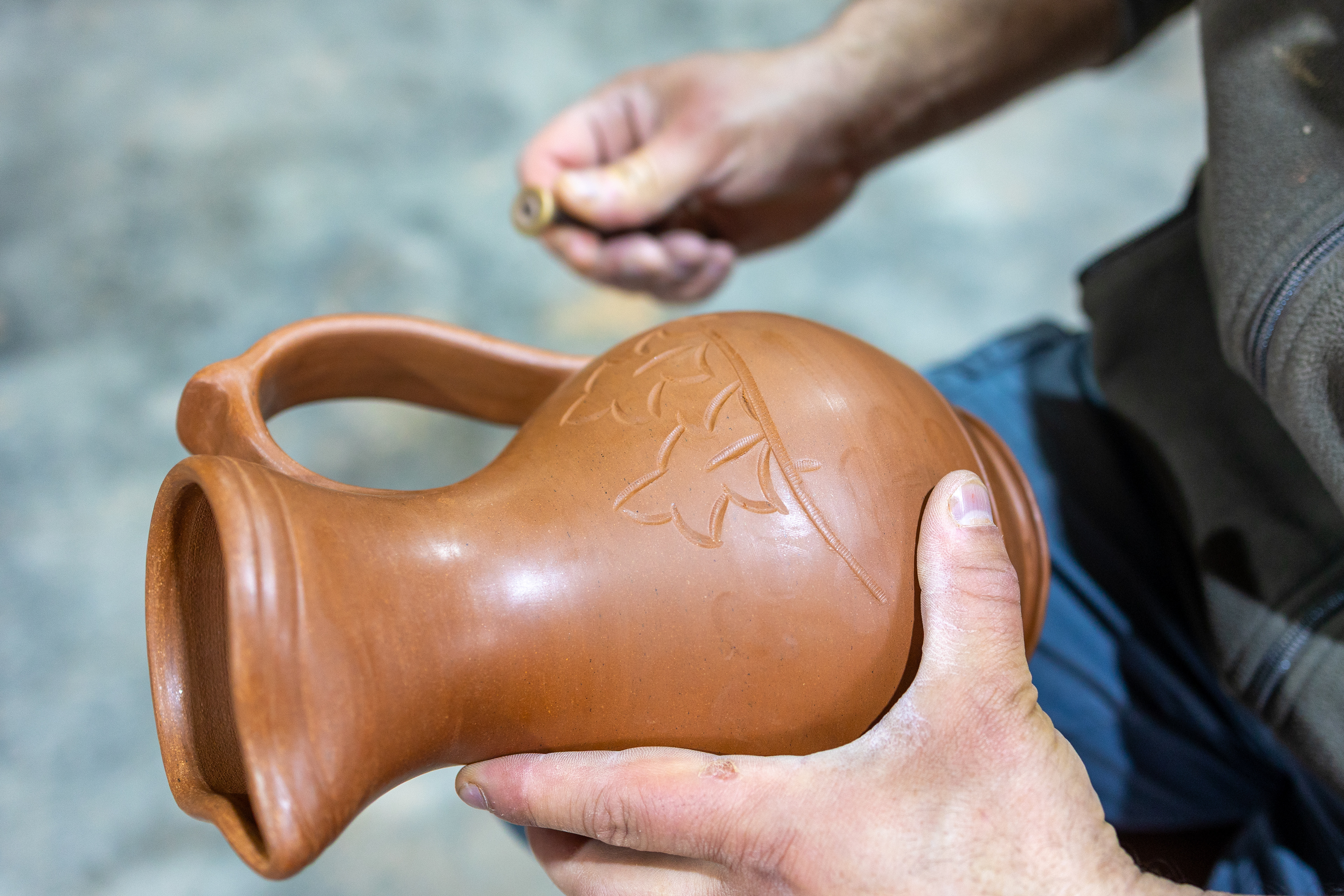
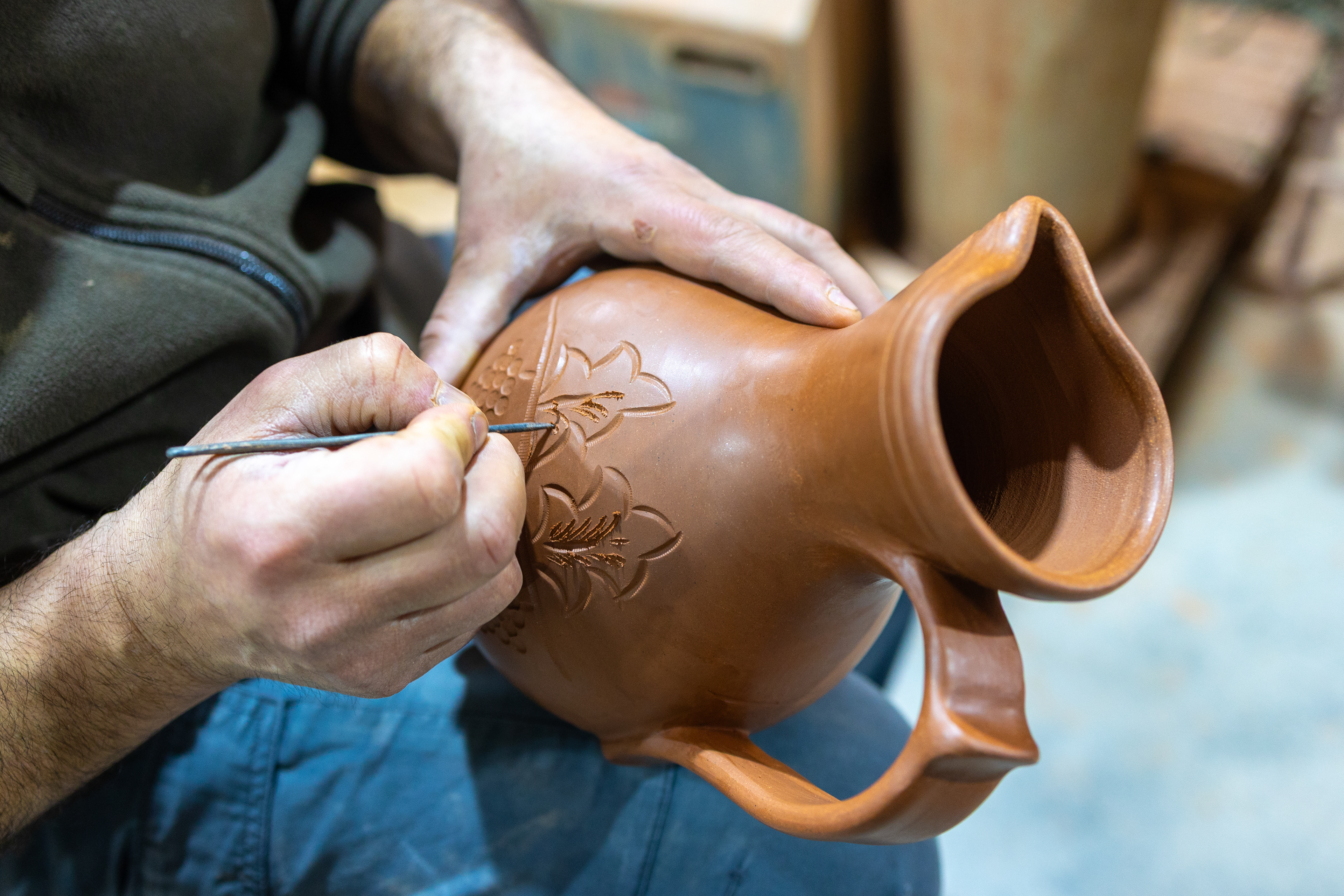
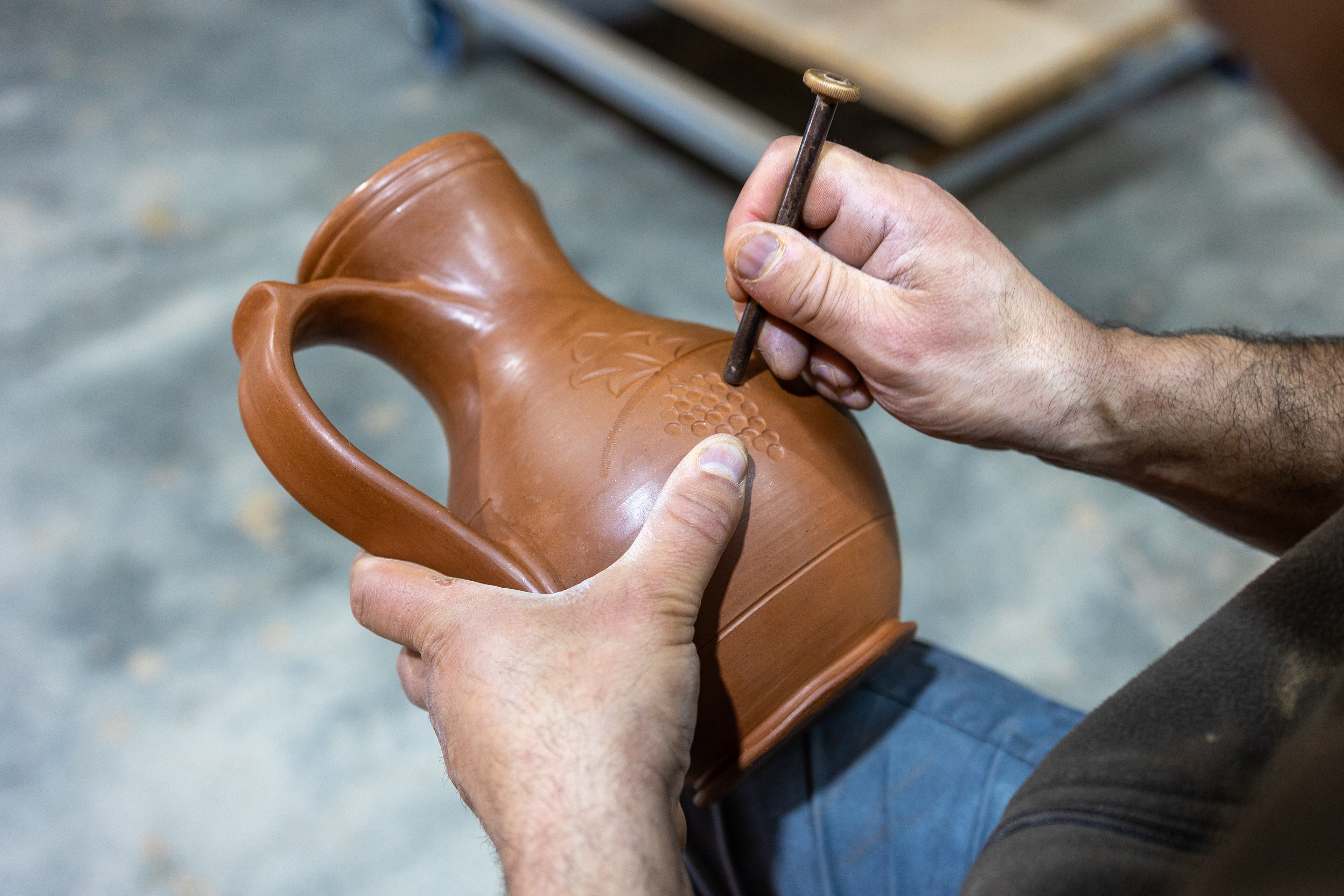
It is very common for these pieces to feature simple decorative elements, and ours is no exception. With the help of a 'pintadeira' (a traditional stamping tool once said to 'paint' the pottery), the decoration is completed in less than five minutes. Once decorated, the piece undergoes its final drying phase before heading to the kiln.
É muito frequente as peças terem um elemento decorativo simples, e a nossa não será exceção. Com a ajuda de uma “pintadeira”, assim chamada pois antigamente se dizia que “pintavam” as peças, a nossa decoração é feita em menos de 5 minutos. Terminada a decoração, a peça terá ainda de fazer a sua última fase de secagem antes de ir ao forno.
6. Firing and the Final Black Pottery
6. Cozedura e barro preto final
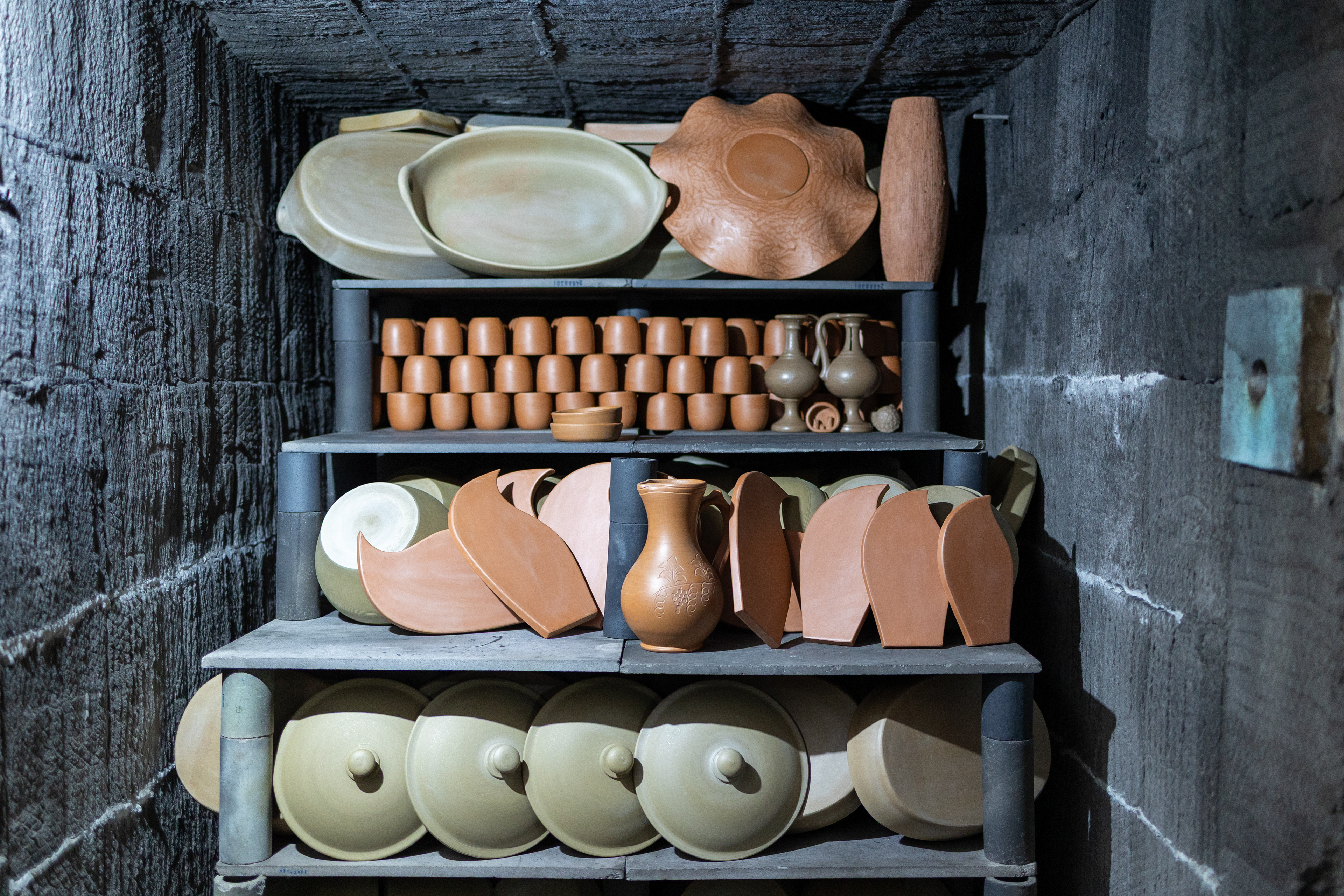
Firing is the culmination of the process, transforming raw clay into ceramic. The pieces are carefully stacked, one by one, inside a gas kiln. The unique black coloration is explained by the reduction firing: the kiln is completely sealed so that the carbon monoxide produced by combustion blackens the clay. Through these chemical and physical reactions, the pottery becomes entirely black and partially waterproofed.
A cozedura é o culminar do processo de transformaçao do barro em cerâmica. As peças são colocadas uma a uma, empilhadas cuidadosamente, num forno a gás. A característica da cor negra do barro explica-se pela cozedura de tipo redutor, que consiste em selar o forno para que o monóxido de carbono, emitido pela combustão, enegreça o barro. Devido a processos físicos e químicos, a louça torna-se completamente negra e, em parte, impermeabilizada.
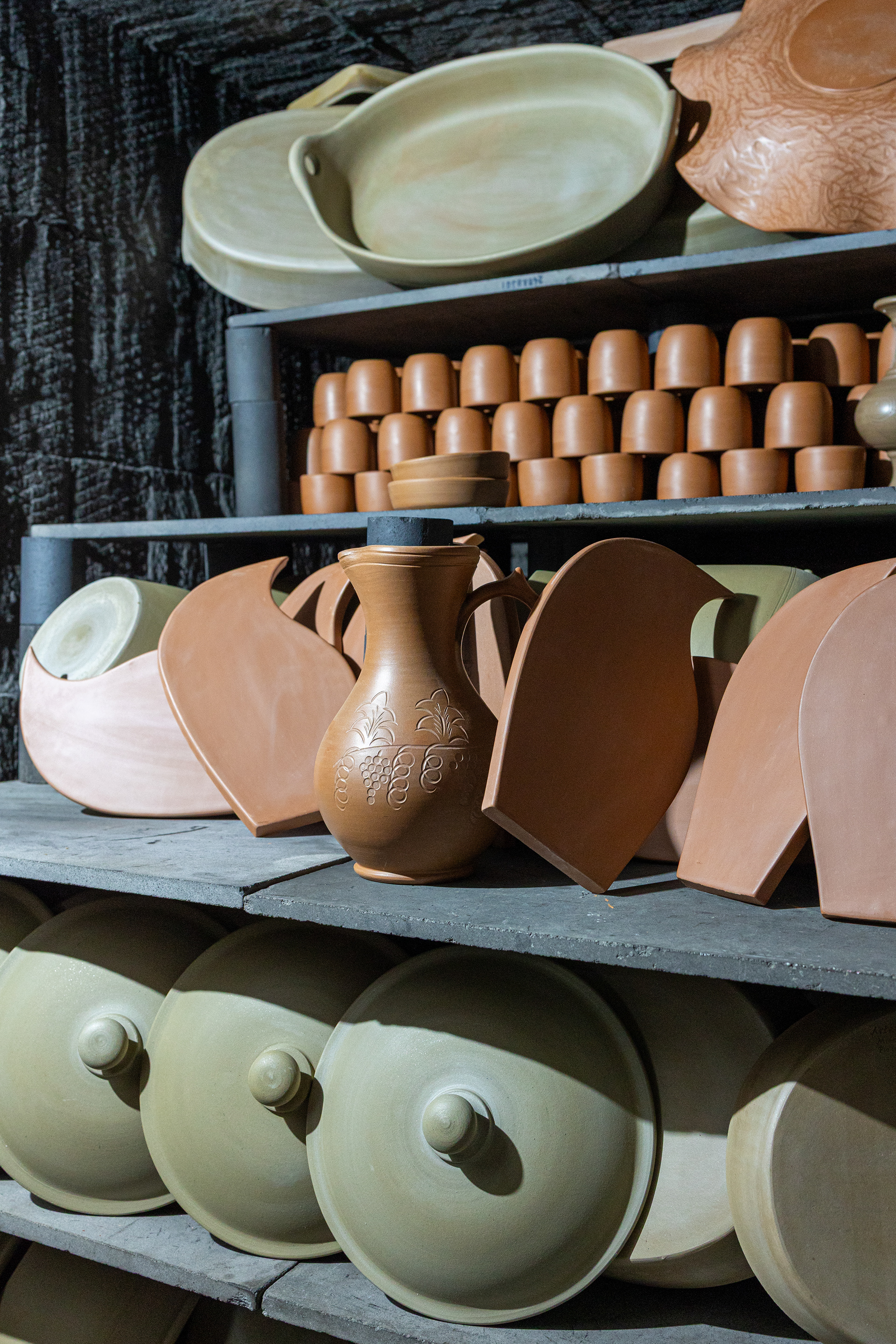
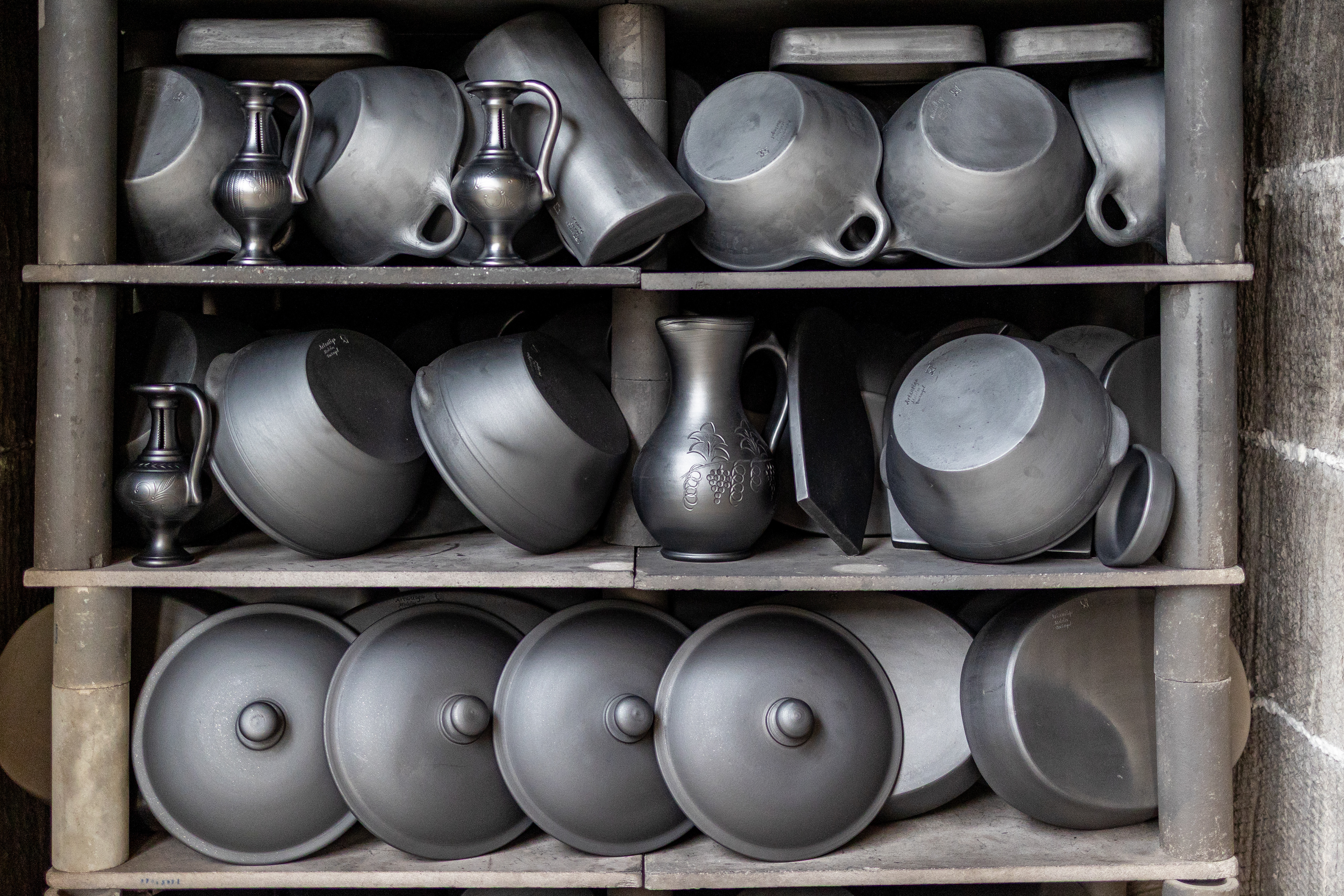
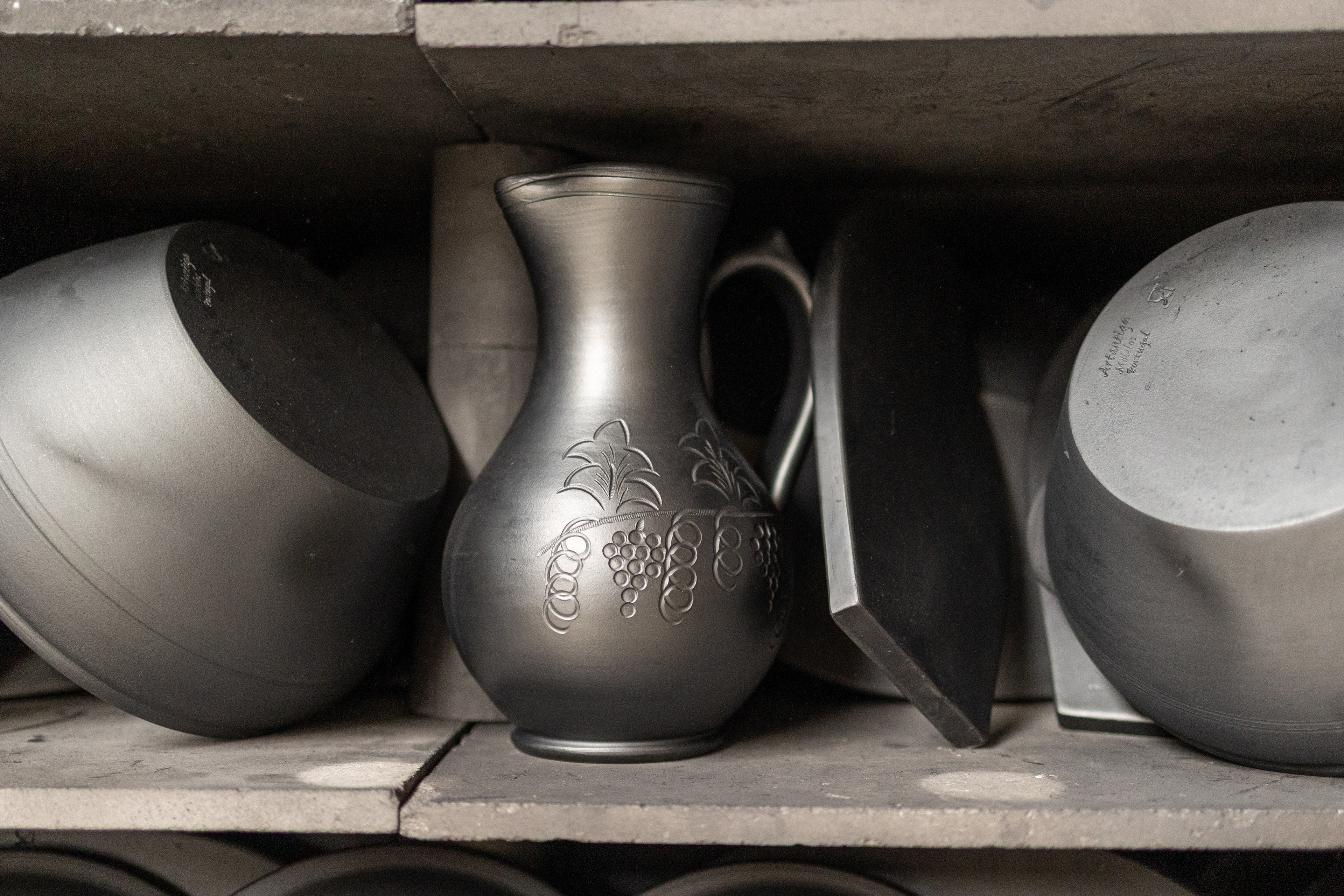
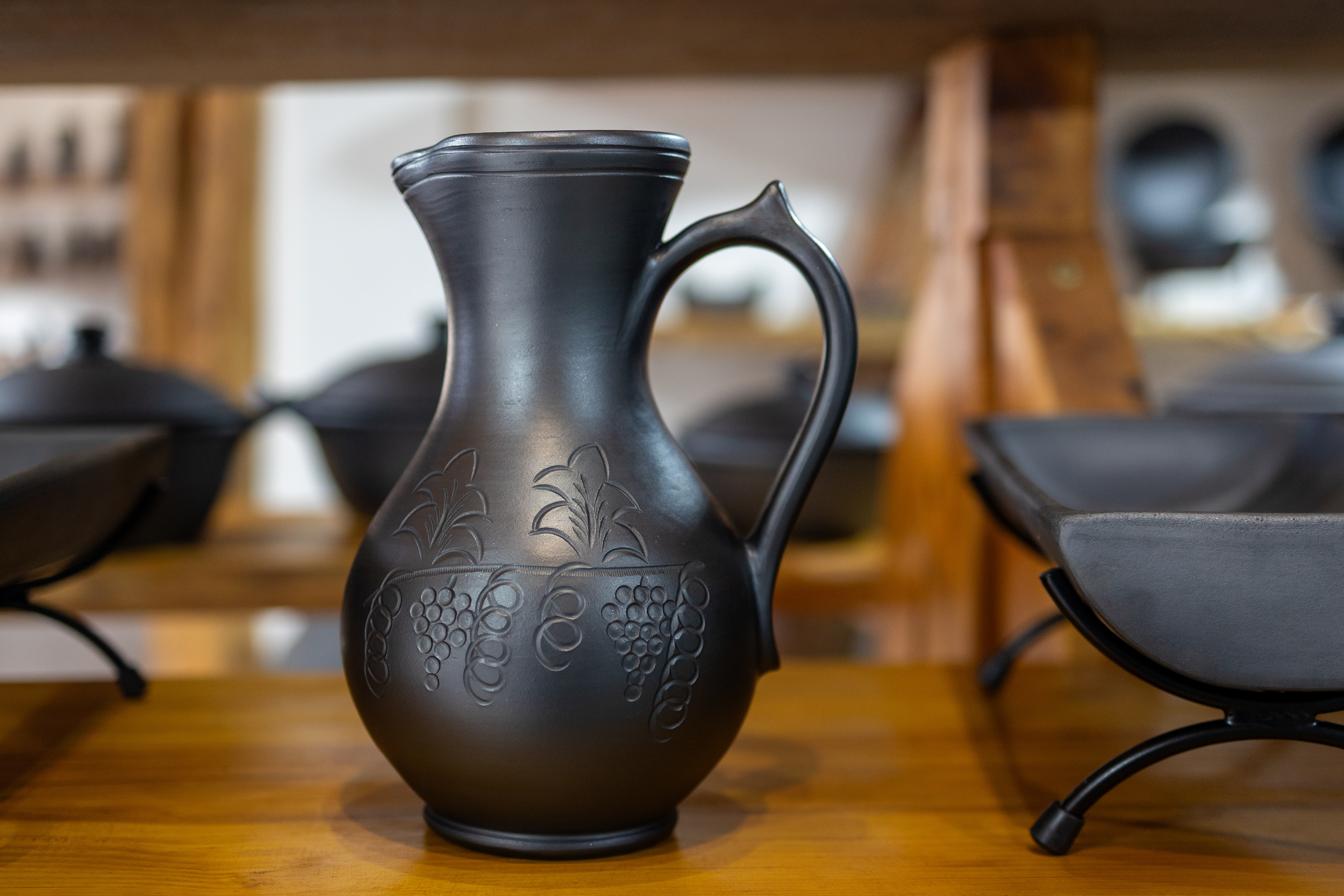
From the earth of Molelinhos to the carbon-saturated fire, the process is complete. The clay has found its final shape, sealed in deep black.
Do barro de Molelinhos ao fogo saturado de carbono, o processo está completo. A argila encontrou a sua forma final, selada em preto profundo.
Special thanks to Olaria ArtAntiga for opening their workshop and keeping this ancestral tradition alive.
Um agradecimento especial à Olaria ArtAntiga por me ter recebido no seu local de trabalho e por manter esta tradição tão antiga viva.
Molelos, Tondela, Portugal.